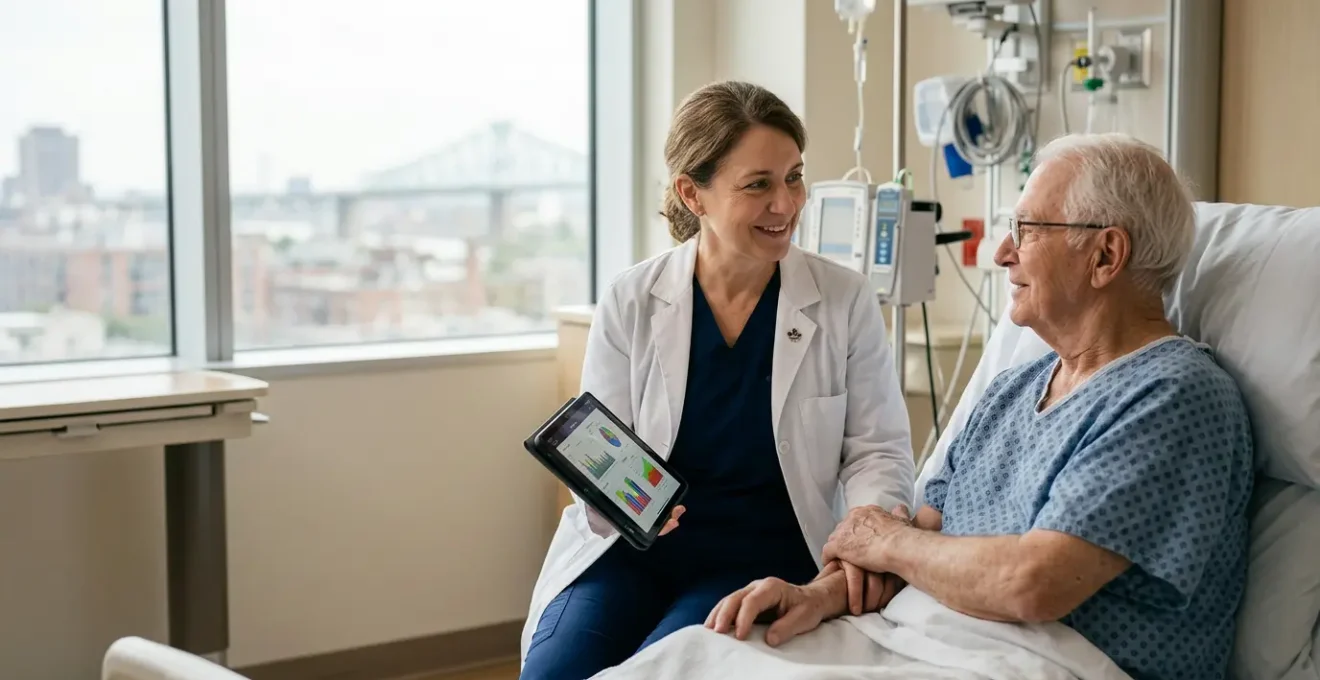
Contrary to common belief, palliative care is not a sign of giving up; it is a strategic layer of support that, when started early, can improve treatment tolerance, quality of life, and even survival for cancer patients in Montreal.
- It focuses on proactively managing symptoms like pain and nausea, which helps you stay stronger for curative treatments.
- Montreal’s healthcare system offers a rich, accessible network of support through the CLSC, specialized hospital programs, and community organizations.
Recommendation: Ask your oncologist for a palliative care consultation at the beginning of your cancer journey, not at the end.
Hearing the word “palliative” can be terrifying. For many newly diagnosed cancer patients, it feels like a final sentence, a signal that the fight is over. This is a profound and deeply ingrained misconception, one that can prevent you from accessing a powerful ally in your cancer journey. The reality, especially here in Montreal’s supportive healthcare landscape, is that palliative care is the complete opposite of giving up. It is not about the end of life; it’s about the quality of your life, starting from day one of your diagnosis.
The core misunderstanding comes from confusing palliative care with hospice care. While hospice is for the very end of life, palliative care is a specialized field of medicine designed to be delivered alongside your curative treatments—like chemotherapy, radiation, or immunotherapy. Its primary goal is to provide an extra layer of support, managing the symptoms, stress, and side effects of both the cancer and its treatment. By controlling pain, nausea, anxiety, and fatigue, this approach helps you stay stronger, tolerate treatments better, and maintain your ability to do the things you love.
This guide is written from the perspective of an oncology nurse navigator, here to walk with you through Montreal’s system. We will dismantle the myths surrounding palliative care by showing you exactly what it is, how it works, and how to access its many layers of support. We’ll explore how to manage fears about pain medication, what to do when treatment affects your appetite, and how to navigate the specific resources available to you and your family in Quebec, from the CLSC to specialized hospital teams. This is your roadmap to adding a powerful support system to your treatment plan.
To help you navigate this essential topic, this article is structured to answer your most pressing questions. Below is a summary of the key areas we will cover to demystify and empower you on your journey.
Summary: A Practical Guide to Palliative Support in Montreal
- Opioids for Cancer Pain: How to Manage Fear of Addiction?
- What to Eat When Chemo Makes Everything Taste Like Metal?
- Support Groups vs Individual Therapy: Which Is Better for Cancer Anxiety?
- The Signs of Compassion Fatigue That Family Caregivers Often Ignore
- When to Involve the CLSC for Home Palliative Care Services?
- When Doctors Say ‘There Is Nothing More We Can Do’: Handling Medical Futility
- 811 Option 2:Why Standard Treatments Fail for 30% of Patients with Complex Conditions?
- How Targeted Immunotherapy Differs from Traditional Chemotherapy in Side Effects?
Opioids for Cancer Pain: How to Manage Fear of Addiction?
The fear of addiction is one of the biggest barriers to effective cancer pain management. It’s a valid concern, especially given public conversations about opioids. However, it’s crucial to distinguish between addiction and the medical use of opioids for cancer pain. When managed by a specialized palliative care team, opioids are a safe and effective tool to control pain, which in turn improves your quality of life and ability to tolerate treatment. Untreated pain causes stress, fatigue, and depression, which can negatively impact your body’s ability to fight cancer. The goal is not to be sedated, but to be comfortable and functional.
In Quebec, the healthcare system has robust safeguards. Data shows that while prescriptions have risen to meet patient needs, this has been accompanied by increased monitoring. According to Quebec health administrative data, cancer pain prescriptions in Quebec increased from 34% to 48% between 2006 and 2020, reflecting a better response to patient suffering. Furthermore, innovative approaches are being used. The McGill University Health Centre, for example, has an integrated pain management program where regulated medical cannabis is used alongside traditional opioids to reduce the total medication burden while improving pain control. This “symptom science” approach, focusing on what works best for you with the lowest risk, is the hallmark of modern palliative pain management.
Your Action Plan: Ensuring Safe Opioid Use in Quebec
- Physician Consent: Your doctor will obtain your consent to access the provincial PharmaNet prescription database for full visibility.
- Treatment Agreement: This consent is formally included in your treatment agreement, specifically for chronic pain management.
- Prescription History Review: Your healthcare team will review your history through the provincial monitoring system to ensure safety.
- Pharmacist Collaboration: Your pharmacist becomes a key partner, helping to personalize your plan and monitor for side effects.
- Regular Palliative Follow-ups: You’ll have consistent appointments with the palliative team to adjust dosages and address any concerns.
What to Eat When Chemo Makes Everything Taste Like Metal?
One of the most frustrating and common side effects of chemotherapy is dysgeusia, a change in your sense of taste often described as “metal mouth.” This isn’t just a minor annoyance; it can lead to poor appetite, weight loss, and nutritional deficiencies, all of which can weaken you and compromise your ability to continue treatment. This is a perfect example of where a palliative care team’s “symptom science” approach provides immense value. They don’t just tell you to eat; they give you practical, evidence-based strategies to overcome the specific problem.
The goal is to trick your taste buds and reduce the metallic sensation. This involves simple but effective changes in your kitchen. Using plastic utensils instead of metal ones, for instance, can immediately reduce the metallic input. The material of your cookware matters too; switching from iron skillets to glass or ceramic can make a difference. It’s also about what you eat and how you prepare it. Red meat is a common trigger, so exploring alternative proteins like chicken, fish, eggs, or beans is recommended. Furthermore, temperature plays a role; cold or room-temperature foods often have a less pronounced metallic taste than hot foods. Adding acidic or tart flavors, like lemon or citrus marinades, can help cut through and mask the metallic taste, making food enjoyable again.
Simple mouth hygiene can also be surprisingly effective. Rinsing your mouth with a solution of baking soda, salt, and water before meals can help neutralize the taste. These are not just old wives’ tales; they are small, actionable steps offered by palliative care and oncology dietitians to maintain your strength and well-being. It’s about giving you a sense of control over your body at a time when much feels out of your control.
Support Groups vs Individual Therapy: Which Is Better for Cancer Anxiety?
A cancer diagnosis brings a storm of emotions: fear, anxiety, uncertainty, and loneliness. Managing this psychological distress is as important as managing physical symptoms. Palliative care is fundamentally holistic, meaning it cares for the whole person—mind, body, and spirit. In Montreal, a rich ecosystem of psychosocial support is available, but navigating the options can be confusing. The two primary pillars are support groups and individual therapy, and the “better” option is deeply personal. It’s not a competition; it’s about finding the right tool for you, at the right time.
Individual therapy, especially with a psycho-oncologist, offers a private, confidential space to explore your deepest fears and develop personalized coping strategies. It’s ideal for processing complex emotions or trauma related to your diagnosis. On the other hand, peer-led support groups offer something therapy cannot: the profound relief of shared experience. As Olga Szyncel from Hope & Cope notes, “A lot of caregivers feel very alone. They often think that they’re the only ones feeling this way.” This applies equally to patients. In a group, you realize you are not alone in your fears or in dealing with strange side effects. This validation can be incredibly powerful. Many people benefit from a hybrid approach, using individual therapy for deep personal work and a support group for community and connection.
The Hope & Cope program at the Jewish General Hospital, a pioneer in this field, perfectly illustrates an integrated model. Their social workers act as navigators, assessing individual needs to recommend the right mix of support, ensuring it aligns with cultural and linguistic preferences.
The following table provides a snapshot of the diverse services available across Montreal, most of which are free and accessible, highlighting the city’s commitment to comprehensive cancer support. Your palliative care team’s social worker can help you navigate these options.
| Service | Type | Language | Cost | Location |
|---|---|---|---|---|
| Hope & Cope (Jewish General) | Peer-led groups & professional support | English/French | Free | 3755 Côte Ste-Catherine |
| West Island Cancer Wellness | Community-based groups | English/French | Free | West Island locations |
| Quebec Cancer Foundation | Professional & peer support | French primary | Free | Multiple locations |
| CLSC Services | Public system therapy | French/English | Covered by RAMQ | Local CLSC centers |
| Private psycho-oncologists | Individual therapy | Various | $100-200/session | Private clinics |
The Signs of Compassion Fatigue That Family Caregivers Often Ignore
Cancer is not a journey taken alone. Behind every patient is often a network of family and friends who become informal caregivers. Their role is invaluable, but it comes at a high cost. Compassion fatigue, or caregiver burnout, is a state of emotional, physical, and mental exhaustion. It’s more than just feeling tired; it’s a gradual erosion of the very empathy that makes them such good caregivers. They may become irritable, withdrawn, or feel hopeless, yet they often ignore these signs, believing they must remain strong for their loved one.
Recognizing these signs is the first step. They can include chronic exhaustion that sleep doesn’t fix, increased anxiety or depression, a reduced sense of personal accomplishment, or feeling detached from the patient’s suffering. Palliative care teams are trained to care for the entire family unit, not just the patient. They can help caregivers recognize these signs and, more importantly, give them permission to take care of themselves. As Olga Szyncel, a program coordinator at Hope & Cope, puts it:
A lot of caregivers feel very alone. They often think that they’re the only ones feeling this way.
– Olga Szyncel, Hope & Cope Wellness Support Program Coordinator
This feeling of isolation is a key driver of burnout. In Montreal, a “first aid kit” of resources exists specifically for caregivers. Palliative care social workers are experts in connecting families to these services. This can range from immediate telephone support from organizations like L’Appui pour les proches aidants, to accessing respite care through the local CLSC to get a much-needed break. It also includes practical help, like applying for the Tax Credit for Informal Caregivers through Revenue Quebec. Supporting the caregiver is not a luxury; it is essential to sustaining the patient’s long-term care.
The Montreal Caregiver’s First Aid Kit: Essential Resources
Your palliative care social worker is your guide to this ecosystem. They can help you contact L’Appui at 1-855-852-7784 for immediate support, call the Quebec Cancer Foundation Info-Cancer Hotline, request a respite care assessment from your local CLSC, and help you navigate financial aid like the Informal Caregiver Allowance. They can also connect you with vital peer support through caregiver-specific groups at places like Hope & Cope, creating a safety net to prevent burnout.
When to Involve the CLSC for Home Palliative Care Services?
The answer is simple: as early as possible. The Centre Local de Services Communautaires (CLSC) is the cornerstone of public home care in Quebec, and their services are covered by RAMQ. Many people mistakenly believe the CLSC only gets involved when care becomes intensive or at the very end of life. In reality, they are a key part of the early “layer of support” that palliative care provides. Involving them early allows for a smoother, more coordinated journey and prevents crises down the road.
Once a referral is made (often by your hospital’s palliative team or by calling 811), a CLSC nurse will conduct an initial evaluation in your home. This is not just about assessing needs for today, but anticipating needs for the future. They can arrange for a wide array of services that make staying at home safer and more comfortable. This includes practical support like nursing visits for medication management or wound care, personal care assistance with bathing and daily activities, and social work support. Crucially, they also manage the loan of medical equipment, such as hospital beds, oxygen concentrators, and mobility aids, preventing last-minute scrambles and out-of-pocket expenses.
Engaging the CLSC early establishes a baseline and builds a relationship. The team gets to know you when you are relatively well, making it easier to notice subtle changes and intervene proactively. This seamless coordination between the hospital team and the at-home CLSC team is a core strength of Quebec’s palliative care system. It ensures that your care plan is continuous and that you and your family have a consistent point of contact in the community, reducing hospital visits and empowering you to remain in the comfort of your own home for as long as possible.
Step-by-Step Guide to Accessing Montreal CLSC Palliative Services
The process is straightforward. First, call 811 and request a ‘demande de services de soutien à domicile pour des soins palliatifs.’ Be prepared with your RAMQ card and diagnosis information. An initial evaluation with a CLSC nurse will be scheduled, typically within a few days. This assessment will determine your eligibility for nursing visits, personal care, social work, and crucial medical equipment loans. The CLSC team will then coordinate directly with your hospital palliative team to ensure a seamless care plan.
When Doctors Say ‘There Is Nothing More We Can Do’: Handling Medical Futility
These are perhaps the most feared words in any medical journey: “There is nothing more we can do.” They can feel like an abandonment, a door slamming shut on all hope. The key insight of palliative care is to reframe this sentence. It should never mean “we are giving up on you.” It should mean, “The focus of our active treatment is shifting.” When curative treatments are no longer effective or the burden of their side effects outweighs any potential benefit, the goal of care shifts from trying to cure the disease to maximizing quality of life.
This is not a failure; it is a change in strategy. This is the moment to ask your oncologist for a palliative care consultation if one isn’t already involved. The palliative team’s job is to open new doors, not close them. They are experts in what can be done. They can offer advanced symptom management for pain or shortness of breath, provide psychosocial and spiritual support for you and your family, and help you define what a “good day” looks like for you now. The goal becomes living as well as possible, for as long as possible, based on your values.
In Quebec, this transition is protected by law. The Quebec Act Respecting End-of-Life Care is built on a foundation of dignity and autonomy. It states, “Respect for the individual and recognition of their rights and freedoms must inspire every act performed in their regard.” This legal framework empowers you to have these difficult conversations and to make your wishes known through tools like Advance Medical Directives (Directives médicales anticipées). This process ensures that your goals—whether they be comfort, peace, or spending quality time with family—become the new focus of your medical team. It’s about shifting from fighting the disease to cherishing the person.
811 Option 2:Why Standard Treatments Fail for 30% of Patients with Complex Conditions?
Sometimes, even the best medical treatments don’t work as expected. Research suggests that for up to 30% of patients with complex conditions, treatment failure isn’t just about the biology of the disease. It’s deeply linked to unmanaged psychosocial distress. Overwhelming anxiety, depression, or caregiver stress can make it impossible for a person to adhere to a complex treatment regimen. A panic attack in the middle of the night about a new side effect can lead a patient to stop taking their medication. This is where palliative care’s holistic approach intersects with a unique and powerful Quebec resource: Info-Social 811, Option 2.
While most people know 811 for medical advice (Option 1), Option 2 connects you instantly, 24/7, to a professional social worker. This service is a “psychosocial first-responder” system, designed to address the exact crises that can lead to treatment abandonment. It’s a lifeline for those moments of acute distress when your cancer clinic is closed. Palliative care teams across Montreal are increasingly integrating 811 Option 2 directly into their patients’ care plans as a proactive safety net.
This integration is a perfect example of proactive versus reactive care. Instead of waiting for a patient to miss an appointment or stop their treatment, the team provides them with a tool they can use the moment stress becomes overwhelming. You can use it for acute anxiety about treatment decisions, when caregiver stress hits a breaking point, or when you need immediate guidance navigating social services or financial aid programs. By providing an immediate outlet and professional support, 811 Option 2 helps manage the emotional and social chaos that can derail even the most promising medical treatments. It ensures that your ability to continue the fight isn’t sabotaged by the understandable stress of the journey.
When and How to Use Quebec’s 811 Option 2 Service
The service is simple to use. Dial 811 and press 2 for Info-Social. It is available 24/7 and is staffed by professionals. It is your go-to resource for acute nighttime anxiety, overwhelming caregiver stress, or when you need immediate crisis intervention and feel unable to continue your treatment. It is a vital, immediate link in your chain of support.
Key Takeaways
- Palliative care is a proactive layer of support that should start at diagnosis, not a last resort.
- Montreal has a robust and accessible ecosystem of free and public resources (CLSC, 811, Hope & Cope) to support patients and families.
- Effectively managing physical and emotional symptoms is not just for comfort—it directly improves your ability to tolerate treatment and can lead to better outcomes.
How Targeted Immunotherapy Differs from Traditional Chemotherapy in Side Effects?
The landscape of cancer treatment is rapidly evolving. Newer treatments like targeted therapy and immunotherapy are revolutionizing care, offering hope where there once was little. However, these new treatments come with new and different side effect profiles, which requires palliative care to evolve as well. This is the cutting edge of “symptom science,” where the palliative team must be as knowledgeable about the latest oncology treatments as they are about symptom management.
Traditional chemotherapy is like a broad-spectrum antibiotic; it attacks all fast-dividing cells, leading to predictable side effects like nausea, hair loss, and fatigue that often occur in cycles. The palliative approach here is well-established. In contrast, immunotherapy works by taking the brakes off your own immune system to fight the cancer. This can lead to a completely different set of side effects that are often autoimmune-like—the revved-up immune system starts attacking healthy tissue, causing inflammation in the skin (rash), colon (diarrhea), or lungs (pneumonitis). The psychological impact is also different. With chemo, there is anticipatory anxiety about known effects. With immunotherapy, there is uncertainty anxiety, as these reactions are unpredictable and can appear months after treatment has finished.
This new reality makes the role of an integrated palliative care team more crucial than ever. They provide the continuous, long-term monitoring required to catch these delayed reactions early. Montreal’s specialized cancer centers, like the Cedars Cancer Centre and the CRCHUM, have developed specific protocols for managing these new side effects. The palliative team works hand-in-hand with oncologists to determine if a new symptom is from the cancer or the treatment, and to provide targeted interventions. This long-term follow-up is essential for ensuring the safety and success of these modern therapies.
The table below outlines how the role of the palliative team adapts to these different treatment modalities, emphasizing the need for specialized, long-term support.
| Aspect | Traditional Chemotherapy | Targeted Immunotherapy | Palliative Team Role |
|---|---|---|---|
| Timing of Side Effects | Predictable, during treatment cycles | Unpredictable, can appear months later | Continuous monitoring required |
| Main Side Effects | Nausea, hair loss, fatigue | Autoimmune-like inflammatory reactions | Symptom-specific interventions |
| Montreal Expertise | All cancer centers | Specialized at Cedars Cancer Centre, CRCHUM | Adapted protocols for each treatment |
| Psychological Impact | Anticipatory anxiety about known effects | Uncertainty anxiety about delayed reactions | Different counseling approaches needed |
| Duration of Support | During active treatment | Extended monitoring post-treatment | Long-term follow-up essential |
The message is clear: palliative care is modern, dynamic, and essential. It is not about surrendering; it is about strengthening your fight by managing the physical and emotional toll of cancer and its treatments. It is a layer of support that empowers you, improves your quality of life, and gives you the best possible chance to benefit from the powerful curative therapies available today. The next step is to start the conversation. For patients and families in Montreal, a wealth of resources is waiting to be activated. Ask your oncologist or family doctor for a referral to a palliative care team today. Think of it as adding another expert specialist to your team, one who is focused entirely on you and your well-being throughout this journey.