Medical innovations & Technologies
The landscape of healthcare is undergoing a profound transformation. From the laboratories of research institutes to the consultation rooms of Montreal’s specialized clinics, medical innovations and technologies are fundamentally changing how we prevent, diagnose, and treat illness. This shift moves us away from a one-size-fits-all approach toward highly personalized, data-driven patient care.
Understanding these advancements is crucial for making informed decisions about your health journey. Whether you are exploring options to accelerate surgical recovery, seeking clarity on complex diagnostic imaging, or wondering how your digital health records are protected within the provincial system, this comprehensive overview explores the core technological pillars reshaping modern medicine.
The Dawn of Precision Medicine and Genomic Profiling
For decades, standard medical protocols applied similar treatments to patients with similar symptoms. Today, precision medicine analyzes your unique genetic makeup to tailor interventions that maximize efficacy while minimizing physical strain.
Targeted Therapy Versus Traditional Treatments
Unlike conventional chemotherapy, which acts like a wide net attacking all rapidly dividing cells, targeted therapies act as a sniper, honing in on specific genetic mutations driving tumor progression. This fundamental difference often leads to more effective tumor management. However, patients must be aware of specific side effects, such as cardiovascular changes or skin toxicities, that emergency room doctors might occasionally miss if they are not specialized in oncology.
Accessing Genomic Testing in Quebec
Securing a genomic profile is the first step toward personalized treatment. In Quebec, navigating the system to unlock these insights requires understanding the available avenues:
- Relying on public healthcare coverage through the RAMQ, which may limit the breadth of genetic panels tested based on specific criteria.
- Investing in private predictive diagnostics, which can cost thousands of dollars but offer immediate, comprehensive insights for those without private insurance plans.
- Exploring specialized clinical trials within university hospital centers in Montreal that offer cutting-edge genomic sequencing for rare diseases.
Advanced Diagnostic Imaging: Beyond the Standard Scan
Accurate treatment relies entirely on precise diagnostics. The transition from basic radiography to high-definition imaging and artificial intelligence has drastically reduced the diagnostic error rate, sometimes by up to thirty percent when combined with second opinions.
Navigating MRI Options and Technologies
When dealing with complex neurological assessments, such as confirming multiple sclerosis through specific white matter hyperintensities, the power of the machine matters. A 3T MRI provides significantly more detail than a standard 1.5T machine, explaining why wait lists for high-definition scans are frequently twice as long in public hospitals. For claustrophobic patients or those concerned about gadolinium contrast retention, private clinics in Montreal often provide specialized protocols or open-bore machines to ensure comfort and safety.
The Role of Artificial Intelligence and Liquid Biopsies
Detecting disease at its microscopic inception is now possible through liquid biopsies, replacing invasive surgeries by identifying cancer DNA circulating in a simple blood test. Furthermore, artificial intelligence is revolutionizing pathology. An AI algorithm cross-referencing a pathologist’s findings can significantly reduce false positives in breast cancer screening, proving that two brains—one human, one digital—are incredibly effective for cancer staging.
Surgical Innovations: Robotics and Minimally Invasive Techniques
The operating room has evolved into a high-tech environment where precision is paramount. Robot-assisted surgery is rapidly becoming the gold standard for complex procedures, offering a stark contrast to traditional open surgeries.
It is a common misconception that surgical robots are autonomous. In reality, the surgeon maintains absolute control via a console, translating their hand movements into micro-movements of the robotic arms. This technology enables single-port surgeries—such as virtually scarless hysterectomies—which drastically reduce postoperative pain and shorten the return-to-work window from six weeks to just two weeks. Patients must, however, verify coverage, as the RAMQ may not always cover the extra costs of specialized robotic supplies used in private or semi-private settings.
Neurostimulation and Innovative Mental Health Therapies
When pharmacological solutions fail or produce intolerable side effects, technology offers alternative neurological pathways for both mental health and chronic pain management.
Neuromodulation for Depression and Pain
Transcranial Magnetic Stimulation (TMS) is gaining traction as a viable alternative to traditional antidepressants for treatment-resistant depression, often presenting fewer systemic side effects. Patients considering this therapy frequently inquire about public coverage; currently, rTMS access via RAMQ remains highly specific, leading many to consult private insurance plans.
For severe, chronic back pain, a spinal cord stimulator implant can intercept pain signals before they reach the brain. During a session, patients typically feel a soothing tingling sensation rather than sharp pain, though understanding when the effect of neurostimulation begins to fade is crucial for long-term pain management planning. Similarly, cutting-edge pain management now includes using VR headsets as a distraction therapy, proving highly effective for burn victims.
Wearables and the Transition to Remote Patient Monitoring
Healthcare is no longer confined to the hospital ward. Consumer technology has bridged the gap between daily lifestyle habits and clinical monitoring, allowing patients to track their vital signs continuously from home.
Devices like real-time continuous glucose monitors can prevent dangerous hypoglycemia during sleep, while smartwatches are increasingly capable of capturing preliminary data for cardiologists. However, a significant gap remains between consumer-grade and medical-grade devices. While your fitness tracker provides excellent motivational metrics, integration protocols currently prevent your primary care physician from automatically viewing this data directly in their official computer systems.
For more critical care, ‘Hospital at Home’ programs utilize advanced vital sign monitors, enabling patients to leave the ward early while remaining under constant digital observation, effectively freeing up nurses for acute patient care.
Navigating Health Data Privacy in the Digital System
As medicine becomes deeply intertwined with digital technology, the management and protection of your personal health data have become a central concern, particularly within the provincial infrastructure.
The Dossier Santé Québec centralizes your medical history, raising important questions about privacy. It is essential to understand your rights regarding this platform:
- You have the right to know who accesses your file. Pharmacists, for example, can view lab results to prevent dangerous drug interactions, even if you have never met them.
- You possess the legal option to block access to your Dossier Santé Québec, though this can be dangerous in emergency situations where paramedics lack crucial medical context.
- Employers cannot legally demand your specific medical diagnosis on a standard sick note, ensuring your condition remains confidential.
Finally, as virtual therapy sessions via specialized apps become commonplace, and instances of hospital data hacks occasionally occur, patients must remain vigilant about the digital tools they use and understand the protocols to follow if their medical data is ever compromised. Blockchain technology is even being explored to finally fix the archaic fax machine problem, promising a more secure future for data transfer.
The integration of medical innovations and technologies into our daily lives offers unprecedented opportunities for proactive health management. By staying informed about the latest diagnostic tools, surgical advancements, and digital privacy rights in Quebec, you empower yourself to navigate the healthcare system with confidence. Exploring these specific technologies further can transform a daunting medical journey into a collaborative, cutting-edge path toward healing and long-term wellness.
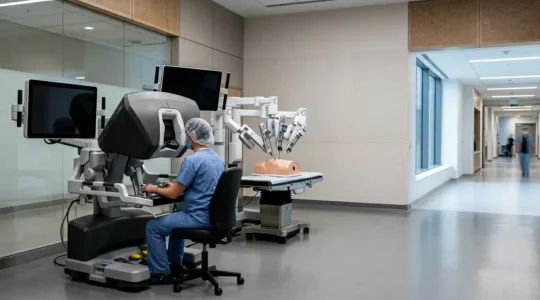
Robot-Assisted Surgery: Does It Really Offer Faster Recovery Than Laparoscopy?
For a patient, the promise of robotic surgery isn’t the robot itself, but the surgeon’s enhanced ability to perform delicate procedures, which directly translates into a quicker, less painful recovery. Robotic systems provide magnified 3D vision and tremor-free instrument control,…
Lire la suite
How Genomic Sequencing Is Solving Medical Mysteries for Rare Diseases in Kids?
For parents of a child with an unsolved medical condition, genomic sequencing offers a direct path to end the painful cycle of uncertainty. It moves beyond endless, inconclusive tests by analyzing your child’s complete genetic blueprint to find a root…
Lire la suite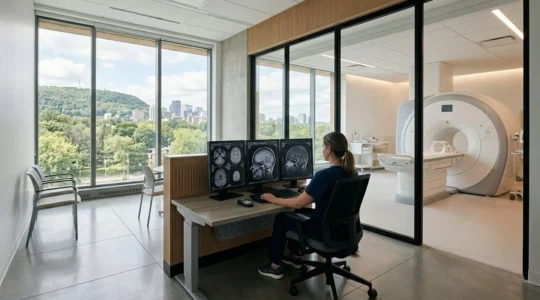
1.5T vs. 3T MRI: Why Your Doctor Needs a Specific Machine for Your Brain Scan
You’ve been sent for a specific MRI, and it’s confusing because the hospital is far or the wait is long; the key is that your doctor hasn’t just chosen a ‘stronger’ machine, but the right ‘diagnostic lens’ for your unique…
Lire la suite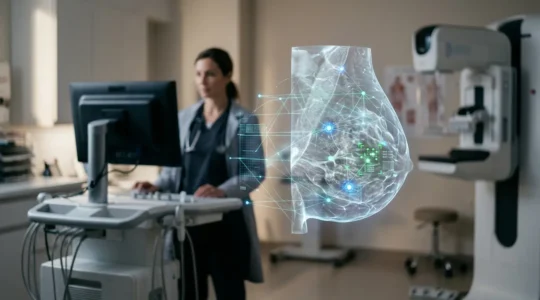
A Radiologist Explains: How AI is Making Breast Cancer Callbacks Less Stressful
Receiving a callback after a mammogram is incredibly stressful, often due to a ‘false positive’. As a radiologist, I want to reassure you that new, regulated AI tools are now acting as a second pair of expert eyes on your…
Lire la suite
Who Really Accesses Your ‘Dossier Santé Québec’ Data Without Your Permission?
Contrary to the belief that your health data is locked down, Quebec’s system architecture legally permits widespread access that can feel like a breach of privacy. Network-level permissions allow entire pharmacy chains, not just your local pharmacist, to view your…
Lire la suite
Beyond the Clinic: How to Actively Synergize Lifestyle with Your Cancer Treatment in Montreal
The most powerful, underutilized tool in your cancer care is creating a lifestyle that actively synergizes with your medical treatments, turning your body into a less hospitable environment for cancer. Targeted nutrition, mindful stress reduction, and specific exercise protocols can…
Lire la suite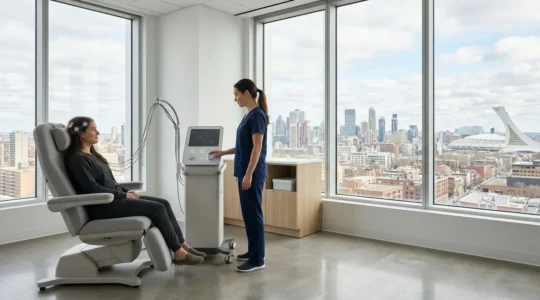
How Neurostimulation Offers Relief for Chronic Pain When Drugs Fail
For those with chronic pain, the goal isn’t just to mask signals with medication; it’s to fundamentally retrain the brain’s response to pain. Neurostimulation technologies like TMS and SCS work by modulating neural pathways, effectively teaching the brain to process…
Lire la suite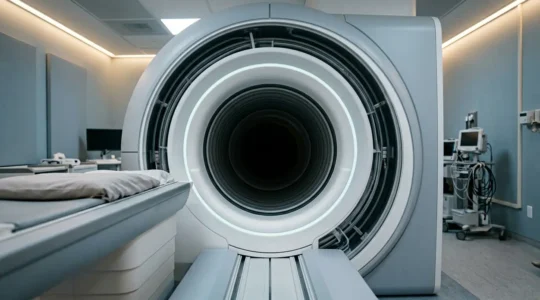
Why an MRI Gives a More Detailed Brain Scan Than a CT — A Radiologist’s Guide for Montreal Patients
The key to diagnosing chronic headaches isn’t just getting any scan; it’s getting the *right* one, and an MRI’s ability to see soft tissue detail is fundamentally superior to a CT for this purpose. MRI uses powerful magnets to visualize…
Lire la suite
How a Precise and Early Diagnosis Can Save You $50,000 in Lost Wages
For a self-employed professional in Montreal, early diagnosis is not a medical expense but a critical financial risk-management strategy to protect your income. Standard health screenings covered by RAMQ have intentional « blind spots » that can leave significant financial risks unaddressed….
Lire la suite
Why Is Electrophysiology the Key to Permanently Curing Certain Arrhythmias?
The key to permanently curing your arrhythmia isn’t the ablation method, but the quality of the electrical ‘map’ created before the procedure even begins. Recurrence is often due to a « mapping error, » not a failed ablation, highlighting the need for…
Lire la suite