
Choosing an ACL surgeon in Quebec is not about finding a competent doctor; it’s about selecting a performance partner whose entire approach is geared toward your return to high-level sport.
- Look beyond basic CMQ certification for fellowship training in sports medicine and a philosophy of preserving your knee’s long-term function.
- Evaluate their team and process, from navigating Quebec’s diagnostic wait times to their commitment to data-driven functional rehabilitation.
Recommendation: Focus your questions on their specific return-to-sport metrics, re-injury rates, and their rehabilitation ecosystem, not just their surgical technique.
The moment you feel that pop in your knee, an athlete’s world narrows. The immediate pain is quickly replaced by a flood of questions and a single, dominant fear: « Will I ever get back to my sport? » As an amateur athlete in Montreal, whether your passion is hockey, skiing, or soccer, a torn ACL feels like a full stop. The path forward seems to be a purely medical one, starting with finding a good orthopedic surgeon. But this is where many athletes make their first critical mistake.
The standard advice is sensible but insufficient: check for board certification, ask about experience, read reviews. While these steps are important, they only vet for basic competence. They won’t tell you if a surgeon’s goal is simply a stable knee for walking, or a dynamic, powerful knee ready for the demands of your sport. The reality is that not all successful surgeries lead to a successful return to play. The key lies in shifting your perspective.
The true mission isn’t just to find a surgeon; it’s to find a performance partner. This is a surgeon whose philosophy, team, and track record are explicitly aligned with the unique goals of an athlete. Their focus extends beyond the operating room to include pre-operative optimization, advanced diagnostic strategies within the Quebec healthcare system, and a deep integration with a top-tier rehabilitation ecosystem. This guide is designed to give you, the injured athlete, an insider’s playbook—the questions and criteria a sports physiotherapist uses to evaluate a surgeon.
This article will break down the crucial factors that separate an adequate surgeon from a great sports medicine partner. We will explore everything from their surgical philosophy on critical structures like the meniscus to how they and their team will guide you through a data-driven recovery, ensuring you don’t just heal, but return to your sport stronger and more resilient.
Summary: Your Guide to Selecting a Top ACL Surgeon in Quebec
- Repair vs Removal: Which Meniscus Surgery Preserves Your Knee Long-Term?
- Why Returning to Hockey Too Soon Increases Re-Injury Risk by 50%?
- Are PRP Injections for Tendonitis Worth the $500 Out-of-Pocket Cost?
- Ultrasound vs MRI: Which Is Better for Diagnosing a Rotator Cuff Tear?
- How 4 Weeks of ‘Pre-hab’ Can Cut Your Post-Op Recovery Time in Half?
- Why Board Certification by the CMQ Matters for Your Safety?
- How to Check If Your Surgeon Has a History of Disciplinary Action?
- How Functional Rehabilitation Differs from Standard Physiotherapy for Seniors?
Repair vs Removal: Which Meniscus Surgery Preserves Your Knee Long-Term?
One of the first and most critical discussions you’ll have with a potential surgeon concerns the meniscus. An ACL tear is often accompanied by meniscal damage, and your surgeon’s approach here is a major indicator of their philosophy. The choice is between a meniscectomy (removing the damaged part) and a meniscal repair. While removal offers a faster initial recovery, it permanently removes a crucial shock absorber, increasing the long-term risk of arthritis. A repair, while involving a longer period of protected weight-bearing, aims to preserve the knee’s natural anatomy and function. A surgeon focused on an athlete’s long-term career will have a strong bias toward preservation whenever possible.
The statistics are sobering; surgery is just the start. Even with technically sound procedures, functional recovery can lag significantly. A 2024 study revealed that less than 25% of patients achieve ≥90% limb symmetry one year after surgery, a key metric for being « game-ready. » This highlights that the surgeon’s technical skill must be matched by a comprehensive post-op plan. Furthermore, a high rate of return to sport is possible, but meniscal suture failure is a primary cause for re-intervention. This is why you must probe your surgeon’s specific re-operation rates for meniscal repairs in ACL patients. Your goal is to find a surgeon who not only attempts to repair but has the skill and post-operative protocol to make it last.
When you meet a surgeon in Montreal, don’t just ask if they can fix your knee. Ask them about their meniscus preservation rate versus their removal rate for cases like yours. Inquire about their experience with complex, combined ACL and meniscus procedures and what their specific graft choice (patellar tendon vs. hamstring, for example) means for your recovery timeline and return to sport. This conversation will reveal whether they see themselves as just a technician for today or as a steward of your knee’s health for the next 20 years.
Why Returning to Hockey Too Soon Increases Re-Injury Risk by 50%?
The pressure to get back on the ice or the field is immense. Every week on the sidelines feels like a loss. However, a top surgeon acts as a crucial brake, protecting you from your own ambition. The single biggest threat to your surgically repaired knee is a premature return to sport. The calendar is a poor guide for recovery; readiness must be based on objective performance metrics. A surgeon who pushes a time-based recovery (« you’ll be back in 9 months ») is less desirable than one who uses a criteria-based approach (« you’ll be back when you pass these specific strength, balance, and agility tests »).
The evidence against rushing back is overwhelming. It’s not just about feeling good; it’s about the tissue’s biological healing and the neuromuscular system’s recalibration. Research clearly shows that for athletes returning to cutting and pivoting sports like hockey or soccer, the consequences are severe. Postoperative participation in these high-demand sports can increase the 2-year knee reinjury rate by more than four times. This isn’t a small risk; it’s a career-altering gamble. A re-tear often leads to more complex revision surgery and a significantly lower chance of ever returning to your pre-injury level.
A surgeon who is a true performance partner understands this. They will be firm about the timeline and the criteria needed for a safe return. They work within a rehabilitation ecosystem that uses objective testing to greenlight your return, protecting your investment in the surgery and your long-term athletic career.
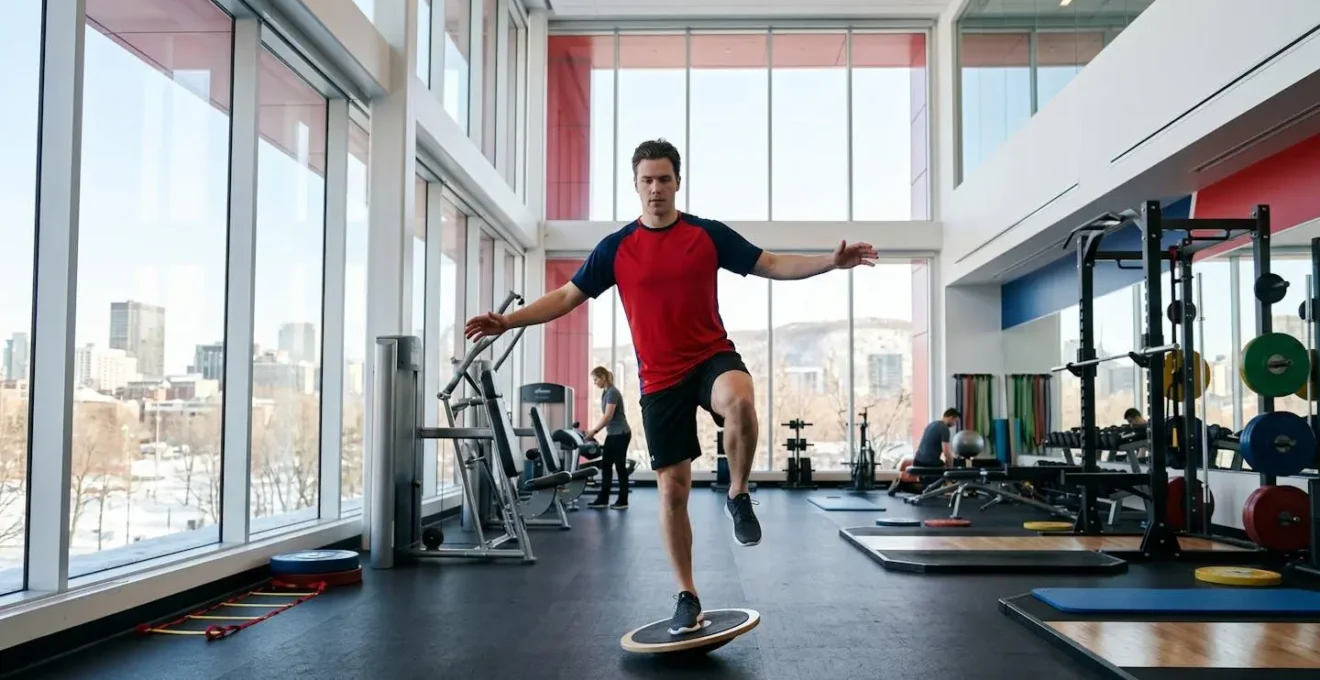
This is why your surgeon’s philosophy on ‘return-to-play’ is paramount. Ask them what specific objective tests they and their physiotherapy partners use to clear an athlete. Do they use force plates for jump testing? Y-Balance tests for stability? On-ice drills for hockey players? Their answer will tell you if their goal is just to get you walking or to get you scoring.
Are PRP Injections for Tendonitis Worth the $500 Out-of-Pocket Cost?
During your long recovery, secondary issues like patellar or hamstring tendonitis can arise, causing pain and delaying your progress. This is where modern biologic treatments like Platelet-Rich Plasma (PRP) injections enter the conversation. A PRP injection uses a concentration of your own blood platelets to theoretically accelerate healing in the irritated tendon. In Quebec, this is an out-of-pocket expense, often costing $500 or more per injection as it is not covered by RAMQ. A forward-thinking surgeon will be knowledgeable about these options and can guide you on whether it’s a worthwhile investment for your specific situation.
The decision to use PRP is a cost-benefit analysis that a good surgeon can help you navigate. It’s not a magic bullet, but for the right athlete, it can be a valuable tool to manage pain, reduce the need for anti-inflammatory drugs (NSAIDs), and get you back to your crucial physiotherapy sessions faster. This can be particularly important for athletes trying to minimize downtime and accelerate their return to strength training.
The table below provides a simplified framework for discussing this option with your surgeon. It outlines the trade-offs between a standard approach and one augmented with PRP, contextualized for an athlete in the Quebec system.
| Factor | With PRP ($500+) | Without PRP |
|---|---|---|
| Coverage | Not covered by RAMQ | Physiotherapy partially covered |
| Recovery Timeline | Potentially 2-4 weeks faster | Standard 6-9 months |
| Pain Management | May reduce need for NSAIDs | Traditional pain medications |
| Missed Physio Sessions | Potentially fewer due to reduced pain | Standard protocol |
| Return to Training | Earlier strength work possible | Conservative progression |
A surgeon’s stance on adjunctive therapies like PRP is a window into their practice style. Are they conservative and sticking only to RAMQ-covered treatments, or are they pragmatic, performance-focused, and open to discussing private options that could give you an edge in recovery? Their ability to have a nuanced conversation about this demonstrates their commitment to a personalized, athlete-centric plan.
Ultrasound vs MRI: Which Is Better for Diagnosing a Rotator Cuff Tear?
While your injury is an ACL tear, a surgeon’s approach to diagnostics for other common sports injuries, like a rotator cuff tear, offers a powerful proxy for their overall proactivity and problem-solving skills within the Quebec healthcare system. The choice between a diagnostic ultrasound and an MRI is a perfect example. Ultrasound is quick, dynamic, and can be done in-office, while an MRI provides detailed static images but comes with significant challenges in the public system.
The reality for patients in Quebec is stark. The public system is burdened with long delays for key diagnostic technologies. According to the Fraser Institute’s 2024 report, the median wait time for an MRI in Quebec can stretch for many weeks, a delay that is simply unacceptable for an athlete aiming for a timely recovery. A proactive, athlete-focused surgeon knows this and has a playbook to navigate it. They may leverage their network to get you seen faster or recommend a private option if the diagnostic clarity is worth the out-of-pocket expense.
This is where the private clinic system in Montreal becomes a strategic tool. Private MRI clinics can often schedule a scan within 24 to 48 hours. While these are not covered by RAMQ, some private insurance plans may cover the cost. A great sports surgeon will have this conversation with you upfront. They will weigh the clinical need for a rapid, high-detail image against the cost, helping you make an informed decision. Their willingness to discuss and facilitate these private pathways, when appropriate, is a sign that they are focused on your outcome and timeline, not just the standard public-system process. This same logic applies to getting your initial ACL diagnosis confirmed quickly.
When you consult a surgeon, ask them how they handle diagnostic bottlenecks. Their answer reveals their resourcefulness and whether they have a system in place to fast-track athletes, which is a key trait of a true performance partner.
How 4 Weeks of ‘Pre-hab’ Can Cut Your Post-Op Recovery Time in Half?
The best surgeons know that the work of recovery begins long before the day of your operation. « Pre-hab, » or pre-operative rehabilitation, is the process of strengthening the muscles around your knee, restoring range of motion, and reducing swelling *before* surgery. It may seem counterintuitive to work out an injured knee, but going into surgery with a strong, mobile, and calm joint is one of the most powerful predictors of a successful outcome. A surgeon who insists on a course of pre-hab is a surgeon who is playing the long game.
The science backs this approach unequivocally. Patients who are diligent with pre-hab don’t just have an easier time in the initial weeks post-op; the benefits are long-lasting. A landmark 2016 study showed that patients with pre-operative rehabilitation had significantly improved outcomes, including a higher likelihood of returning to their pre-injury level of sport two years after surgery. By reducing swelling and restoring full knee extension before the operation, you give your surgeon a better canvas to work on and drastically shorten the initial, most painful phase of recovery.
A performance-focused surgeon will not book your surgery for the following week. They will refer you immediately to a trusted physiotherapist and give you a clear set of goals to achieve first. They understand that those 4-6 weeks of pre-hab will pay massive dividends over the 9-12 months of post-op recovery. This commitment to pre-hab is a clear sign of a surgeon who has a comprehensive, evidence-based system.
Your Montreal Pre-hab Goals Checklist
- Achieve full leg extension: Your knee must be able to go completely straight, matching the uninjured leg.
- Reduce swelling to zero: Use the RICE (Rest, Ice, Compression, Elevation) protocol to eliminate all swelling.
- Regain quadriceps strength: Aim for your injured leg’s quad to be at least 90% as strong as the non-injured leg.
- Achieve symmetrical quad extension: You should be able to complete a straight leg raise without any « lag » or drop at the end of the movement.
- Restore a normal gait pattern: You should be able to walk without a limp before heading into surgery.
- Build hamstring strength: Performing exercises like prone hamstring curls helps support the future graft.
Why Board Certification by the CMQ Matters for Your Safety?
Let’s be clear: certification by the Collège des médecins du Québec (CMQ) and the Royal College of Physicians and Surgeons of Canada (FRCSC) is the absolute, non-negotiable minimum standard. It confirms a surgeon has completed the required medical training and is licensed to practice in the province. This is the first box you check to ensure safety and basic competence. You can and should verify any surgeon’s status on the CMQ directory. But for an athlete, this is merely the starting line, not the finish.
The critical mistake is assuming all certified surgeons are equally equipped to handle an athlete’s knee. The real differentiator lies in sub-specialty training. As the prevailing wisdom in elite sports medicine circles suggests, the baseline certification is just the beginning.
CMQ certification is the minimum standard. Look for sub-specialty training – a Fellowship in Sports Medicine is far more relevant for an athlete’s outcome.
– Collège des médecins du Québec Guidelines, CMQ Accreditation Standards
A Fellowship in Sports Medicine or Arthroscopic Surgery is a year or more of intensive, post-residency training focused exclusively on complex joint injuries like yours. A fellowship-trained surgeon has seen a high volume of athletic injuries, is versed in the latest techniques for graft choices and meniscal repair, and fundamentally thinks like an athlete. They understand the biomechanics of your sport and what it takes to get you back to it. You can often find this information by looking for their credentials on university websites (like McGill or Université de Montréal) or hospital profiles.
When vetting a surgeon, go beyond the basic « Are you board-certified? » Ask them, « Where did you do your fellowship, and what was its focus? » Look for affiliations with professional or university sports teams in Montreal—surgeons trusted by the Canadiens, Alouettes, or CF Montréal are operating at the highest level of sports medicine. This level of specialization is what separates a general orthopedic surgeon from a true performance partner.
How to Check If Your Surgeon Has a History of Disciplinary Action?
Before you entrust your knee and your athletic career to a surgeon, performing due diligence on their professional standing is a mandatory step. This goes beyond reading patient reviews, which can be subjective. An objective check of a surgeon’s disciplinary record is a crucial element of establishing trust. The Collège des médecins du Québec (CMQ) provides a public directory, the « Bottin des médecins, » which is your primary tool for this verification.
The process is straightforward. You can search the directory by the surgeon’s name or permit number. The profile will show their status, including any current limitations or conditions on their practice. Most importantly, it will have a tab for their disciplinary history, if any exists. Look for any past suspensions, fines, or practice restrictions. A clean record is a fundamental prerequisite. You should also verify that their license is current and that they have active insurance coverage. This is the baseline of safety and professionalism.
However, just as with board certification, a clean record is necessary but not sufficient. It tells you they haven’t had serious issues, but it doesn’t tell you if they are exceptional at what they do. The elite surgeons in the Montreal sports medicine community are often distinguished by their active involvement and reputation, not just the absence of negative marks.
A clean disciplinary record is essential but insufficient. Seek surgeons actively involved with Montreal sports teams like the Canadiens or Alouettes as an indicator of specialized expertise.
– Montreal Sports Medicine Community, Professional Standards in Sports Surgery
This « insider » tip is invaluable. A surgeon who is the team physician for a professional sports franchise has been vetted at the highest possible level. These roles are given to surgeons who are not only technically brilliant but also leaders in sports-specific rehabilitation and return-to-play protocols. Their affiliation is a powerful signal of elite, specialized expertise that a simple directory search cannot provide.
Key Takeaways
- Adopt a « Performance Partner » Mindset: Your goal isn’t just a stable knee; it’s a high-level return to sport. Choose a surgeon whose entire philosophy reflects this.
- Prioritize Pre-hab and Data-Driven Rehab: The best outcomes come from surgeons who insist on pre-operative optimization and use objective metrics (not the calendar) to clear you for return to play.
- Look Beyond Basic Certification: A Fellowship in Sports Medicine and affiliations with professional or university sports teams are strong indicators of elite, specialized expertise relevant to an athlete.
How Functional Rehabilitation Differs from Standard Physiotherapy for Seniors?
The single most important factor in your successful return to sport may not be the surgery itself, but the quality of the rehabilitation that follows. And this is where the surgeon’s role as a performance partner becomes most clear: a great surgeon operates within a great rehabilitation ecosystem. The distinction between standard physiotherapy and athlete-focused functional rehabilitation is massive. While the title mentions seniors, the principle is even more critical for an athlete. Standard physio aims to restore basic function—walking without pain, climbing stairs. Functional rehabilitation aims to restore sport-specific performance—cutting on skates, absorbing a landing, or accelerating out of a block.
A top sports surgeon will not simply hand you a generic physiotherapy prescription. They will have a network of trusted clinics and specialists who speak the same language of athletic performance. These specialists possess advanced credentials like the SPC (Sport Physiotherapy Canada) Diploma or CSCS (Certified Strength & Conditioning Specialist) and use advanced equipment to bridge the gap from the clinic to the field.
The difference in approach is night and day. Ask a potential surgeon about their preferred physiotherapy partners and what their return-to-play testing protocol looks like. Their answer will reveal the sophistication of their rehabilitation ecosystem.
| Aspect | Standard Physiotherapy | Functional Rehabilitation |
|---|---|---|
| Focus | Basic movement restoration | Sport-specific movement patterns |
| Environment | Clinical setting | Simulated game conditions |
| Equipment | Basic resistance bands, weights | Biodex dynamometer, force plates, agility equipment |
| Testing | Range of motion, basic strength | Y-Balance Test, on-ice drills, sport-specific metrics |
| Timeline | Time-based milestones | Performance-based criteria |
| Staff Credentials | General physiotherapist | SPC Diploma, CSCS certified specialists |
Your best chance at returning to sports safely and at a high level is a rehabilitation plan that is overseen by these specialists for the full 9-12 months. When choosing your surgeon, you are also choosing their network. Ensure their network is equipped with the tools, like Biodex dynamometers for strength testing and force plates for jump analysis, and the expertise to rebuild you as an athlete, not just a patient.
Ultimately, selecting the right surgeon is your first, most critical move in the long chess match of ACL recovery. By moving beyond surface-level credentials and adopting the mindset of finding a true performance partner, you fundamentally change the odds in your favor. Evaluate their philosophy, question their metrics, and inspect their rehabilitation ecosystem. This proactive, educated approach is how you transform a devastating injury into a structured comeback story, returning to the game you love not just healed, but rebuilt to last.