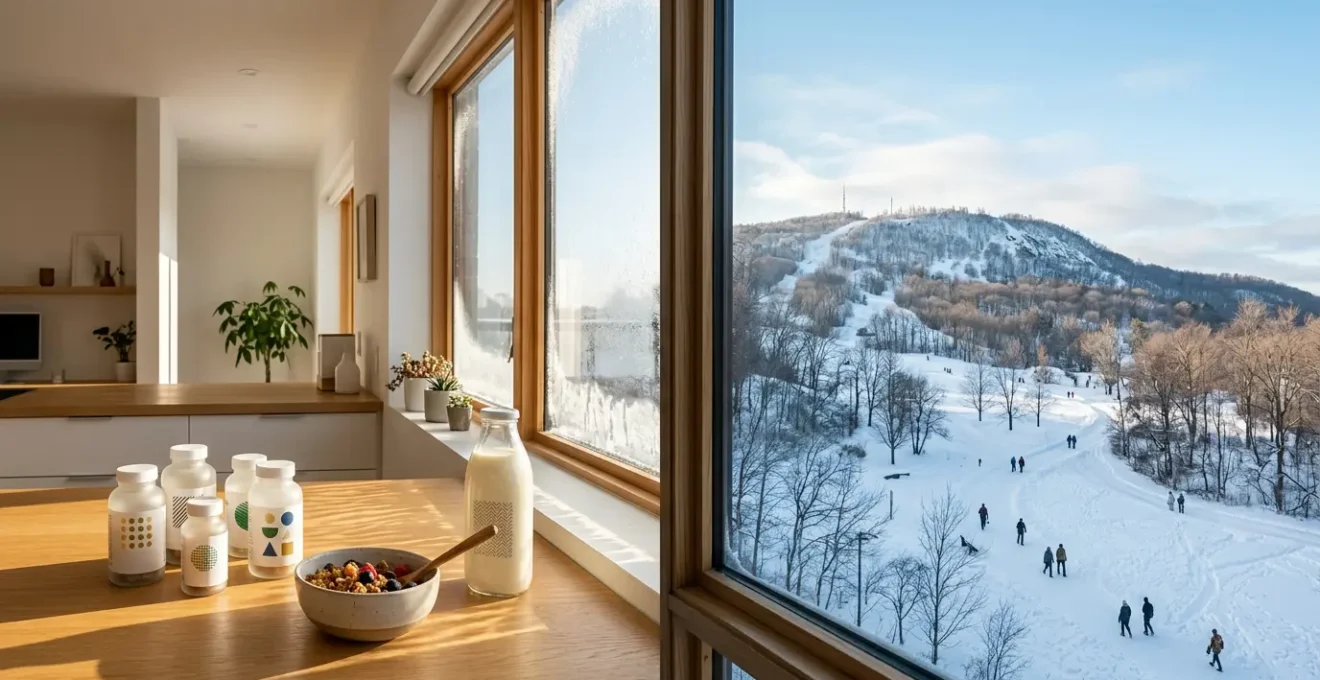
Surviving Montreal’s winter isn’t just about taking Vitamin D; it’s about implementing a precise, synergistic protocol of targeted supplementation and lifestyle adjustments.
- Dosage is not one-size-fits-all; it must be calibrated to your lifestyle, age, and when you start.
- Vitamin D works in tandem with Vitamin K2 for safety and effectiveness, and its absorption is linked to proper hydration.
Recommendation: Start a calibrated Vitamin D3+K2 supplement protocol by late September and pair it with medical-grade light therapy to proactively manage both energy levels and mood.
As the days shorten and the first chill signals a long Montreal winter, a familiar lethargy can set in. For many residents, this “November energy crash” feels inevitable, a price to pay for living in our northern city. The common advice is simple: take some vitamin D. You might hear suggestions to eat more fatty fish or to “get sun” on the rare bright day. While well-intentioned, this advice often misses the crucial details that make a real difference between merely surviving and thriving through the five months of darkness.
The reality for a Montrealer is that our latitude makes effective sun-driven vitamin D synthesis biologically impossible for a large portion of the year. The question then isn’t *if* you should supplement, but *how* to do it with precision. The key lies beyond just popping a generic pill. A truly effective strategy is a synergistic protocol—one that considers the correct dosage, crucial co-factors like vitamin K2, the verifiable limits of diet, the right timing, and powerful tools like light therapy and proper hydration.
This guide moves past the platitudes. It’s a nutritionist-designed framework specifically for Montreal residents. We will explore the science-backed dosages, debunk common myths about diet, clarify the importance of testing, and outline a complete wellness strategy to reclaim your energy and mood, even when the sun feels like a distant memory.
To navigate this essential topic, we have structured this guide to answer your most pressing questions. Below is a summary of the precise, actionable strategies we will cover to build your personalized Montreal winter wellness plan.
Summary: Your Complete Protocol for Montreal’s Winter
- 1000 IU vs 5000 IU: How Much Vitamin D Is Safe to Take Daily?
- Why Taking Vitamin D Without K2 Might Be Harming Your Arteries?
- Salmon vs Supplements: Can You Really Eat Enough Vitamin D in Winter?
- Is Paying $60 for a Vitamin D Blood Test Worth It?
- When to Start Supplementing to Prevent the November Energy Crash?
- 10,000 Lux: Why Your Cheap Amazon Lamp Is Not Treating Your SAD?
- The ‘8 Glasses a Day’ Myth: How Much Water Do You Really Need?
- How to Overcome Seasonal Depression During the 5 Months of Montreal Winter?
1000 IU vs 5000 IU: How Much Vitamin D Is Safe to Take Daily?
Determining your daily Vitamin D intake isn’t a guessing game; it requires a calibrated approach based on your specific situation. While some bottles on the shelf offer low doses of 1,000 IU and others go as high as 5,000 IU, the optimal amount for a Montrealer depends heavily on lifestyle, age, and existing levels. For the average adult office worker who spends most of their day indoors, a baseline of 1,000-2,000 IU daily is a common starting point. However, this is not a universal prescription. In fact, during winter, 13% of Canadians fall below the deficiency threshold of 30 nmol/L, a risk that increases with reduced sun exposure.
Factors like age and skin tone play a significant role in this nutrient calibration. Osteoporosis Canada recommends that adults over 50 aim for 800-2,000 IU to support bone health. Furthermore, individuals with darker skin tones have more melanin, which naturally reduces the skin’s ability to produce vitamin D from sunlight. This means they often require higher levels of supplementation to maintain adequate levels in northern latitudes like Montreal’s. Even your diet, such as regular consumption of fortified Quebec dairy products like Natrel milk, can contribute around 100-150 IU, which should be factored into your total calculation.
Ultimately, the goal is to reach an optimal blood level, typically considered to be between 75 and 125 nmol/L. The only way to know for sure is to get tested after a few months of consistent supplementation and adjust your dosage accordingly. A personalized strategy is always superior to a one-size-fits-all dose.
Your Action Plan: Calibrating Your Montreal Vitamin D Dosage
- Assess your baseline: If you’re an indoor office worker, start by considering a daily intake of 1,000-2,000 IU.
- Factor in age: If you are over 50, ensure you are aiming for the 800-2,000 IU range as recommended by Osteoporosis Canada.
- Consider skin tone: Acknowledge that darker skin requires more diligent and potentially higher supplementation in our northern latitude.
- Account for diet: If you regularly consume fortified Quebec dairy, you can mentally deduct 100-150 IU from your supplement target.
- Monitor and adjust: Commit to getting a blood test after 3 months to verify your levels are in the optimal range (75-125 nmol/L) and adjust your dose with a healthcare professional.
Why Taking Vitamin D Without K2 Might Be Harming Your Arteries?
One of the most overlooked aspects of Vitamin D supplementation is its synergistic relationship with Vitamin K2. While Vitamin D3 is excellent at increasing calcium absorption from your diet, it doesn’t control where that calcium ends up. Without a director, this influx of calcium can potentially be deposited in soft tissues like arteries, leading to calcification and increasing cardiovascular risk over the long term. This is where Vitamin K2 (specifically the MK-7 form) plays a critical role as a “calcium traffic cop.”
Vitamin K2 activates two key proteins: osteocalcin and Matrix Gla Protein (MGP). Osteocalcin helps bind calcium to your bones, strengthening your skeleton. MGP, conversely, helps prevent calcium from depositing in your arteries. Therefore, taking D3 without adequate K2 is like calling for more traffic onto a highway system without any signs or traffic lights—it increases the potential for chaos and blockages. For Montrealers supplementing through the long winter, pairing D3 with K2 is a crucial step for both bone health and cardiovascular protection.
This synergy is why many forward-thinking supplement brands now offer D3 and K2 in a combined formula. While these combination products might be slightly more expensive, the added benefit of ensuring calcium is directed to your bones and away from your arteries makes it a worthwhile investment in long-term health. The following table breaks down the key differences in a local Montreal context.
Local Tip: Finding K2 in Quebec Foods
While supplementation is the most reliable way to get K2, research shows that it is naturally present in some fermented foods. For Montreal residents, this offers a delicious way to complement your D3 intake. Aged cheeses from Quebec’s vibrant fromageries are a notable source of K2. Incorporating local aged cheeses into your diet can be a strategic and enjoyable part of your overall protocol to ensure calcium is properly utilized.
| Factor | D3 Only | D3 + K2 Combo |
|---|---|---|
| Calcium Absorption | Increased | Increased + Directed |
| Bone Benefits | Good | Optimal |
| Arterial Protection | Limited | Enhanced |
| Monthly Cost (Quebec) | $8-12 | $15-25 |
| Available at Jean Coutu | Yes | Yes (limited brands) |
Salmon vs Supplements: Can You Really Eat Enough Vitamin D in Winter?
A common belief is that a healthy diet is sufficient to maintain vitamin D levels. While certain foods are indeed rich in this nutrient, relying solely on diet to meet your needs during a Montreal winter is practically impossible. The numbers are clear: research from the McGill University Health Centre reveals that the average Canadian gets only 100-150 IU of vitamin D from their diet each day. This is a fraction of the 1,000-2,000 IU recommended as a baseline for most adults.
Let’s consider a “best-case scenario” meal plan focused on vitamin D-rich foods you could find in Montreal. Wild salmon, available at places like Atwater Market, is a powerhouse, with a 4-ounce serving providing about 600 IU. Fortified products like milk and yogurt, along with eggs, add smaller amounts. You could also seek out UV-exposed mushrooms, which can offer a decent boost. However, even with a highly dedicated effort, reaching the bioavailability threshold for optimal health through food alone is a significant challenge.
Here is a realistic example of a high-vitamin D meal plan for one day:
- Breakfast: 2 eggs (80 IU) + 1 cup fortified Natrel milk (100 IU)
- Lunch: 4 oz. wild salmon sandwich (600 IU)
- Snack: Fortified yogurt (80 IU)
- Dinner: Sautéed UV-exposed mushrooms (approx. 400 IU)
- Daily Total: Approximately 1,260 IU
While this impressive total of 1,260 IU is far above the national average, it still falls short of the 2,000 IU that many individuals may require for optimal levels. This demonstrates that while a nutrient-rich diet is a vital supporting player, supplementation is not optional but essential for effectively managing vitamin D levels from November to April in Montreal.
Is Paying $60 for a Vitamin D Blood Test Worth It?
Supplementing blindly can feel like navigating without a map. While a general dosage provides a good starting point, a simple blood test is the only way to truly personalize your protocol and ensure you are in the optimal range. In Montreal, residents can access this test in a couple of ways. It may be covered by RAMQ if prescribed by a physician for specific conditions like osteoporosis or malabsorption disorders. Alternatively, you can pay for it directly at private clinics like Biron, where the cost typically ranges from $50 to $70. Given the importance of vitamin D for overall health, this is a small price to pay for crucial data.
The test measures your level of 25-hydroxyvitamin D in nanomoles per litre (nmol/L), the Canadian standard. Understanding your results is key: a level below 30 nmol/L indicates deficiency, 30-50 nmol/L is considered insufficient for many, and the optimal range for most adults is 75-125 nmol/L. Knowing your number allows you and your healthcare provider to adjust your dosage precisely, preventing both deficiency and excessive intake. This data-driven approach removes guesswork and maximizes the benefits of your supplementation efforts.
The effectiveness of supplementation is well-documented. As a report from Statistics Canada highlights, taking supplements makes a significant, measurable difference in preventing deficiency.
Canadian adults who took vitamin D supplements were nearly four times less likely to have vitamin D levels below 30 nmol/L than those who did not.
– Statistics Canada, Canadian Health Measures Survey 2016-2019
Considering that data from Statistics Canada shows that while 65% of Canadians are above the sufficient threshold of 50 nmol/L, a significant portion are not, testing becomes an invaluable tool. It transforms your wellness plan from a generic recommendation into a personalized, effective strategy for conquering the winter.
When to Start Supplementing to Prevent the November Energy Crash?
Many Montrealers wait until they feel the fatigue and low mood of late fall before reaching for their vitamin D bottle. However, the key to avoiding the “November energy crash” is a proactive, not reactive, approach. The science behind this timing is tied directly to our city’s latitude. Our bodies synthesize vitamin D when UVB rays from the sun interact with our skin, but the angle of the sun during a large part of the year in Montreal is too low for this process to occur effectively.
This isn’t speculation; it’s a matter of physics and biology. Because of Montreal’s position on the globe (around 45.5°N), we face a significant “vitamin D winter.” Landmark research from Boston University shows that at latitudes above approximately 42°N, there is virtually zero previtamin D3 production from sunlight on the skin from November through February. Your body is simply unable to make its own vitamin D during these months, no matter how sunny the day may seem.
This means your body relies entirely on the stores you built up during the summer and any dietary or supplemental intake. Since these stores begin to deplete rapidly once production ceases, waiting until November is too late; you’re already starting from a deficit. To maintain optimal levels and prevent the dip in energy and mood, a nutritionist specializing in northern climates would advise you to begin your supplementation protocol by late September or early October. This ensures you have a steady supply as your body’s natural production winds down, creating a seamless transition into the winter months and keeping your levels stable.
10,000 Lux: Why Your Cheap Amazon Lamp Is Not Treating Your SAD?
For many struggling with the winter blues or a formal diagnosis of Seasonal Affective Disorder (SAD), light therapy can be a game-changer. However, not all lamps are created equal. The market is flooded with inexpensive “happy lights,” but their effectiveness is often minimal because they fail to meet the clinical standard for treating SAD. The therapeutic threshold is all about intensity, measured in lux. A medical-grade light therapy box must deliver 10,000 lux at a comfortable distance.
Most cheap lamps found on Amazon provide only 2,500-5,000 lux, meaning you would need to sit in front of them for hours to get a therapeutic effect, which is impractical. A proper 10,000 lux lamp, used correctly, requires only 20-30 minutes of exposure each morning. Correct usage is also key: the lamp should be positioned 16-24 inches from your face and slightly above eye level to mimic the angle of the natural sun. This morning “circadian reset” helps regulate your body clock, improve mood, and boost energy levels. Another crucial feature is a UV filter; medical-grade lamps are specified as 99.9% UV-free to protect your skin and eyes.
While the price difference is significant, investing in a medical-grade device is an investment in a treatment that actually works. You can find these at medical supply stores in Montreal or, for a more budget-friendly option, look for used units on Kijiji, often available for $75-150. Just be sure to verify the lux rating and UV-filtering specifications before purchasing.
| Feature | Medical-Grade (10,000 lux) | Consumer ‘Happy Lights’ |
|---|---|---|
| Light Output | 10,000 lux at 16-24 inches | 2,500-5,000 lux typical |
| UV Filtering | 99.9% UV-free | Variable/unspecified |
| Effective Duration | 20-30 minutes morning | 1-2 hours needed |
| Price Range (Montreal) | $150-300 | $30-80 |
| Where to Buy | Medical supply stores, specialized retailers | Amazon, general retail |
The ‘8 Glasses a Day’ Myth: How Much Water Do You Really Need?
While vitamin D and light therapy are primary tools, we can’t ignore a foundational pillar of health: hydration. The old “8 glasses a day” rule is a vague guideline, but the need for adequate water intake becomes even more critical during a Canadian winter. The dry air in our heated homes and offices creates a significant challenge. Indoor heating systems can cause a drop in humidity to as low as 10-20%, far below the optimal range of 30-50%. This arid environment pulls moisture from your body through your skin and breath, leading to a state of low-grade, chronic dehydration that you may not even notice.
This matters profoundly for your winter wellness protocol because hydration directly impacts nutrient absorption and transport. As a fat-soluble vitamin, vitamin D requires a well-functioning system to be utilized effectively. Dehydration can impair these metabolic processes, potentially reducing the benefit you get from your carefully calibrated supplements. As one expert from McMaster University notes, the entire system must be supported.
Fat-soluble vitamins like Vitamin D require adequate fat in the diet and a well-hydrated system for optimal absorption and transport.
– Dr. Philip Britz-McKibbin, McMaster University Chemistry Department
So, how much do you need? Instead of counting glasses, a better approach is to monitor the color of your urine—it should be a pale, straw-like yellow. Thirst is also a delayed indicator; if you feel thirsty, you are already on your way to being dehydrated. Make it a habit to sip water consistently throughout the day, especially in a dry, heated office environment. Supporting your body with proper hydration is a simple but powerful way to ensure your vitamin D protocol can work at its best.
Key Takeaways
- A precise, synergistic protocol involving D3, K2, light therapy, and lifestyle is more effective than just taking a pill.
- Start supplementing with 1,000-2,000 IU of D3+K2 by late September to prevent the November crash.
- Relying on diet alone is insufficient; supplementation is essential in Montreal’s latitude.
How to Overcome Seasonal Depression During the 5 Months of Montreal Winter?
Tackling seasonal depression and low energy requires a holistic approach that goes beyond supplements and lamps. It involves weaving a web of supportive habits into the fabric of your daily life, leveraging the unique opportunities Montreal offers even in the depths of winter. The goal is to build resilience through social connection, physical activity, and proactive mental health care. Research from McMaster University reinforces the link between poor Vitamin D status and a higher risk for depression, underlining the importance of integrating your supplementation protocol into a broader wellness strategy.
Embrace the city’s infrastructure. A daily walk through the RÉSO underground network provides weather-protected exercise and a change of scenery. Combat social isolation by making weekly plans to visit cozy Mile End cafés like Café Olimpico or explore your local borough’s community centers and YMCA for indoor activities. Furthermore, lean into the season by attending winter festivals like Montréal en Lumière in February or Igloofest in January. These events provide much-needed light, activity, and social engagement.
Most importantly, don’t hesitate to seek professional support. If you are experiencing symptoms of seasonal depression, your local CLSC offers free, RAMQ-covered services. For English-language support, organizations like AMI-Québec run support groups specifically for mood disorders. For more intensive treatment, the Montreal General Hospital’s Mood Disorders Program accepts referrals from family doctors. Creating a toolkit of these habits and resources can transform the winter from a period of endurance into a season of active well-being.
- Daily: Get weather-protected exercise by walking through the RÉSO underground network.
- Weekly: Maintain social connections by visiting local cafés or community centers in your borough.
- Monthly: Attend a winter festival like Igloofest or Montréal en Lumière for light and social activity.
- Seasonal: Consider a heat therapy session at a spa like Bota Bota in the Old Port to combat the cold.
By implementing this comprehensive and synergistic protocol, you can actively manage your physical and mental well-being. The next logical step is to book an appointment with your family doctor to discuss getting a baseline vitamin D test and creating a personalized plan.