
For Montrealers with atrial fibrillation (AFib), the sharp drop in winter temperatures is more than uncomfortable—it’s a significant cardiovascular trigger. The cold initiates a complex physiological cascade that goes far beyond simple vasoconstriction, increasing blood viscosity, elevating blood pressure, and putting direct stress on the autonomic nervous system. This article explains these underlying mechanisms and provides specific, evidence-based strategies for managing arrhythmia risk during Montreal’s demanding winters.
If you live with a heart arrhythmia in Montreal, you’ve likely felt it: that sudden flutter, racing, or pounding in your chest that seems to appear the moment you step into the biting winter air. It’s a common and unsettling experience for many patients. The standard explanation often points to vasoconstriction—the body’s natural response to narrow blood vessels to conserve heat, which forces the heart to work harder. While true, this is a significant oversimplification of a much more complex issue.
This simplified view overlooks a cascade of physiological events that the Quebec cold uniquely exacerbates. It’s not just about the heart pumping against tighter vessels. It involves changes in blood thickness, a surge in stress hormones, and a state of autonomic dysregulation that creates a proarrhythmic environment in the heart. For arrhythmia patients, particularly those with atrial fibrillation (AFib), understanding this « perfect storm » of triggers is the first step toward effective management. It’s about moving beyond the generic advice to « stay warm » and adopting a proactive strategy rooted in environmental cardiology.
This guide moves beyond the basics to explore the deep connection between Montreal’s climate and cardiac health. We will examine the specific risks, from stroke to the dangers of snow shoveling, and outline modern management strategies. By understanding the ‘why’ behind your symptoms, you can better prepare for and navigate the winter months with confidence and control.
To help you navigate this critical topic, this article breaks down the key factors, risks, and management strategies for dealing with arrhythmia in a cold climate. Explore the sections below to gain a comprehensive understanding of how to protect your heart during a Montreal winter.
Summary: Understanding and Managing Cardiac Arrhythmia in a Cold Climate
- Why Is Stroke Risk 5 Times Higher for Untreated Atrial Fibrillation?
- How to Use Your Smartwatch to Detect Silent Atrial Fibrillation?
- Beta-Blockers or Ablation: Which Strategy Is Best for a 40-Year-Old?
- The « Holiday Heart » Mistake That Lands People in the ER in December
- What to Do When Your Heart Rate Exceeds 140 BPM at Rest?
- The « Heart Attack Snow » Phenomenon That Kills Healthy Men
- Why Is the « FAST » Acronym Critical for Saving Brain Cells?
- How Does Cardiac Ablation Fix Short-Circuits in the Heart Permanently?
Why Is Stroke Risk 5 Times Higher for Untreated Atrial Fibrillation?
Atrial fibrillation (AFib) is characterized by a chaotic, irregular quivering of the heart’s upper chambers (the atria). This disordered rhythm prevents the heart from pumping blood efficiently, allowing it to pool and potentially form clots. If a clot breaks free, travels to the brain, and blocks an artery, it causes an ischemic stroke. This mechanism is why individuals with AFib face a 3 to 5 times greater risk for ischemic stroke, according to the Heart and Stroke Foundation of Canada. The risk is not theoretical; it’s a direct consequence of the heart’s mechanics during an AFib episode.
In a cold climate like Montreal’s, this baseline risk is amplified. Cold exposure triggers a process known as hemoconcentration, where the blood becomes thicker and more viscous. This change increases the propensity for clot formation. Furthermore, the cold induces vasoconstriction, raising blood pressure and placing additional strain on the entire cardiovascular system. This combination of thicker blood and higher pressure makes it easier for a clot to form and significantly more dangerous if one does.
A study from the Montreal Heart Institute provides stark local context, finding that exposure to cold was a significant contributing factor to mortality in the city. The research highlighted how winter conditions can directly exacerbate underlying cardiovascular risks. For a patient with untreated AFib, a cold Montreal day is not just uncomfortable; it represents an environment where the fundamental drivers of stroke risk are dangerously heightened.
How to Use Your Smartwatch to Detect Silent Atrial Fibrillation?
One of the most insidious aspects of atrial fibrillation is that it can be « silent » or paroxysmal, occurring in brief, often unnoticed episodes. A patient may not feel palpitations, yet the underlying stroke risk persists. Modern wearables, particularly smartwatches with electrocardiogram (ECG) capabilities, have become powerful tools for detecting these silent events, offering a new frontier in personal health monitoring, especially during the high-risk winter months in Montreal.
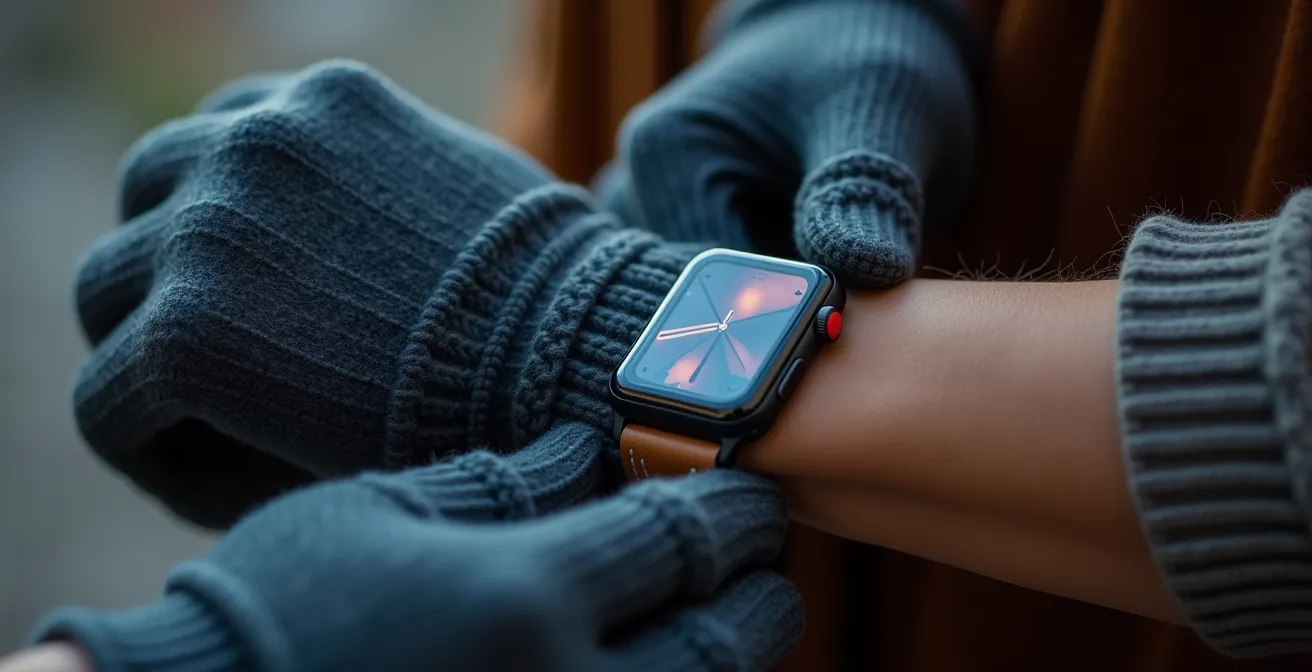
These devices use photoplethysmography (PPG) sensors to monitor heart rate continuously and can alert you to irregularities. More advanced models allow you to take a single-lead ECG reading on demand by simply touching the watch’s crown. This function can capture a snapshot of your heart’s electrical activity, which you can then save as a PDF and share with your cardiologist. For a Montrealer experiencing fleeting symptoms after a walk in the cold, this ability to capture objective data in the moment is invaluable for diagnosis and management.
However, performance in extreme cold is a practical concern. Batteries drain faster, and sensor accuracy can be affected by layers of clothing. When choosing a device for winter use in Montreal, it’s crucial to consider these environmental factors. The following table, based on an analysis of sensor performance in varied conditions, provides a general comparison of how popular smartwatches might perform under the stressful conditions of a Canadian winter.
| Feature | Apple Watch | Galaxy Watch | Garmin |
|---|---|---|---|
| Battery Life at -20°C | 12-18 hours | 16-24 hours | 3-5 days |
| Sensor Accuracy Under Layers | 95% accurate | 92% accurate | 90% accurate |
| ECG Function in Cold | Fully functional | Limited | Not available |
| Export to Quebec Health Systems | PDF compatible | PDF compatible | Limited formats |
While no device replaces a medical-grade monitor, a capable smartwatch serves as a crucial first-alert system, empowering patients to take an active role in their cardiac health.
Beta-Blockers or Ablation: Which Strategy Is Best for a 40-Year-Old?
For a younger, active 40-year-old patient diagnosed with AFib, the treatment conversation often revolves around two primary strategies: long-term medical management with drugs like beta-blockers, or a corrective procedure known as catheter ablation. The choice is highly individualized and depends on symptom severity, lifestyle, and the structural health of the heart. Beta-blockers work by slowing the heart rate and reducing the force of contractions, which can lessen the symptoms of AFib and control the heart rate during episodes. They are often a first-line therapy.
However, for a 40-year-old who wishes to maintain an active lifestyle, the potential side effects of beta-blockers—such as fatigue and reduced exercise tolerance—can be significant drawbacks. This is where catheter ablation becomes a compelling alternative. This procedure aims to cure the arrhythmia by electrically isolating the faulty electrical pathways in the heart that trigger AFib. While more invasive, a successful ablation can eliminate the need for long-term medication and its associated side effects, offering a return to a more normal quality of life.
In Quebec, the decision-making process must also account for logistical realities, such as wait times. A national registry reported a 30.1-week average wait time for AF ablation, a factor that must be discussed with your cardiologist. As Dr. Vidal Essebag of the McGill University Health Centre notes, the long-term benefits are substantial.
By preventing the long-term complications of atrial fibrillation, ablation has the potential to improve health and reduce the use of healthcare resources and hospital admissions
– Dr. Vidal Essebag, McGill University Health Centre announcement
For a younger patient, the prospect of avoiding decades of medication and preventing the progressive nature of AFib often makes ablation a preferred long-term strategy, despite the initial procedural risks and wait times.
The « Holiday Heart » Mistake That Lands People in the ER in December
The festive season in Montreal, from holiday parties to New Year’s celebrations, often coincides with a spike in emergency room visits for new-onset atrial fibrillation. This phenomenon is so common it has a name: « Holiday Heart Syndrome. » It refers to an acute cardiac arrhythmia, most often AFib, occurring in otherwise healthy individuals after an episode of heavy alcohol consumption. Alcohol is a direct cardiotoxin that can disrupt the heart’s electrical signaling and its management of calcium, making the atria highly susceptible to irregular rhythms.
During the holidays, several triggers often combine. In addition to alcohol, people tend to consume rich, high-sodium foods, experience emotional stress, and suffer from dehydration and lack of sleep. Each of these factors can independently provoke an arrhythmia. When combined, they create a potent cocktail of triggers. A large, salty meal like a traditional Quebec tourtière, paired with several alcoholic beverages, can overstimulate the vagus nerve and lead to dehydration, setting the stage for an AFib episode.
Managing AFib during the holidays doesn’t mean avoiding festivities entirely. It means making conscious, heart-healthy modifications. The key is moderation and smart substitutions to mitigate the primary triggers. Being mindful of portion sizes, staying hydrated with water between alcoholic drinks, and opting for lower-sodium preparations of traditional dishes can significantly reduce your risk. These small adjustments allow you to enjoy the season without compromising your cardiac health.
The Mechanism of Holiday Heart Syndrome
The ‘Holiday heart syndrome’ describes cardiac arrhythmia following heavy drinking. Alcohol disrupts heart cell signaling and calcium regulation, with atria becoming prone to irregular electrical activity from abnormal calcium release, triggering extra action potentials and AFib. Ethanol metabolites cause oxidative stress and mitochondrial injury.
What to Do When Your Heart Rate Exceeds 140 BPM at Rest?
For a person with known atrial fibrillation, seeing a resting heart rate climb above 140 beats per minute (BPM) is an immediate call for calm, deliberate action. This condition, known as AFib with Rapid Ventricular Response (RVR), means the chaotic signals from the atria are being conducted too quickly to the ventricles. It is a potentially dangerous situation that can lead to symptoms like severe shortness of breath, dizziness, chest pain, or fainting. If these symptoms are present, it is a medical emergency, and you should call 911 immediately.
If you are experiencing a high heart rate but feel relatively stable without severe symptoms, the first step is to sit down, try to relax, and practice slow, deep breathing to calm your autonomic nervous system. Avoid any stimulants like caffeine or nicotine. If your cardiologist has prescribed a « pill-in-the-pocket » medication for such events, now would be the time to take it as directed. Continue to monitor your heart rate. If it does not begin to decrease within the timeframe advised by your doctor or if you start to feel worse, you must seek emergency medical attention.
Living in Montreal adds a layer of complexity, particularly during winter. What if you are snowed in during an ice storm? In this scenario, it is critical to have an emergency plan. Keep your phone fully charged and inform a family member or neighbour of your situation. When calling 811 (for advice) or 911 (for emergency), clearly state your symptoms, your location, and any mobility limitations due to the weather. Differentiating an AFib emergency from something like the flu is also key; the flu typically involves fever and body aches with a gradual onset, whereas AFib with RVR is often sudden and primarily cardiac in nature. When in doubt, always err on the side of caution and seek a medical assessment.
The « Heart Attack Snow » Phenomenon That Kills Healthy Men
Every winter, news outlets report tragic stories of seemingly healthy individuals, often men, suffering fatal heart attacks while shoveling snow. This is not a coincidence; it’s a recognized medical phenomenon. The act of shoveling heavy, wet snow is an intense isometric and aerobic exercise. This activity, performed in a cold environment, creates a perfect storm of cardiovascular stressors. The cold constricts blood vessels, increasing blood pressure, while the physical exertion dramatically increases the heart’s demand for oxygen.
For someone with underlying, perhaps undiagnosed, coronary artery disease, this sudden, extreme cardiovascular load can cause a plaque to rupture, leading to a heart attack. For a patient with known arrhythmia, the surge of adrenaline and physiological stress can easily trigger a dangerous episode. Research from the Montreal Heart Institute has shown that 2.54% of deaths in Montreal are attributable to cold, and strenuous activities like shoveling are a major contributor to this statistic. The danger is particularly high with the heavy, wet snow common in Quebec, which requires significantly more effort to lift than light, powdery snow.
Because this activity is so common and necessary in Montreal, it is crucial for anyone with a cardiac condition to approach it with extreme caution. This means warming up properly, dressing in breathable layers, using a smaller shovel, and taking frequent breaks. Pushing snow is always preferable to lifting it. Most importantly, it means listening to your body and stopping immediately at the first sign of chest discomfort, unusual shortness of breath, dizziness, or palpitations. For many, hiring a local « déneigeur » is not a luxury but a critical investment in their health.
Your 5-Point Safety Check Before Shoveling
- Assess the Conditions: Before starting, check the external stressors. Note the air temperature, wind chill, and the type of snow (light and powdery vs. heavy and wet). This is your external risk profile.
- Inventory Your Body: Take a moment to check in with yourself. How do you feel? Are you well-rested and hydrated? Check your resting heart rate. Do not shovel if you are feeling unwell or already experiencing palpitations.
- Check for Coherence: Compare the task’s demands with your current state. If the snow is extremely heavy and you feel fatigued, your readiness is not coherent with the risk. Consider postponing or getting help.
- Recognize Warning Signals: Know the difference between normal exertion and a cardiac warning sign. Be prepared to immediately recognize symptoms like chest tightness, dizziness, excessive shortness ofbreath, or palpitations as a red flag, not just « part of the workout. »
- Define Your Action Plan: Before lifting the first shovel, set your limits. Decide to work in 10-minute intervals with 15-minute breaks. Push the snow instead of lifting. Have your phone with you and know when to stop and call for help.
Why Is the « FAST » Acronym Critical for Saving Brain Cells?
When a stroke occurs, time is brain. Every minute that blood flow is blocked, millions of brain cells die. Rapid recognition of stroke symptoms is the single most important factor in improving outcomes, as it allows for timely medical intervention that can restore blood flow and limit permanent disability. To facilitate this, public health organizations promote the simple and effective « FAST » acronym. In bilingual Canada, it’s equally important to know its French equivalent, « VITE, » which is promoted by the Heart and Stroke Foundation.
The acronym stands for the key signs to watch for:
- Face: Is one side of the face drooping?
- Arm: Can the person raise both arms, or does one drift downward?
- Speech: Is their speech slurred or strange?
- Time: It’s time to call 911 immediately if you see any of these signs.
During a Montreal winter, there can be unique points of confusion. Numbness from the cold wind can be mistaken for facial drooping, shivering can mimic slurred speech, and general stiffness from the cold might look like arm weakness. It’s crucial to perform the specific tests—asking the person to smile, raise both arms, or repeat a simple phrase—to differentiate between environmental effects and true neurological symptoms. The table below outlines these distinctions.
| English (FAST) | French (VITE) | What to Check | Winter Confusion Signs |
|---|---|---|---|
| Face drooping | Visage affaissé | Ask person to smile | Not to confuse with facial numbness from cold wind |
| Arm weakness | Incapacité (disability) | Raise both arms | Different from cold-stiff limbs |
| Speech difficulty | Trouble de la parole | Repeat simple phrase | Not same as shivering speech |
| Time to call 911 | Extrême urgence | Note time of symptoms | Act fast even in snowstorm |
For anyone with AFib, their family, and their community, memorizing and being prepared to use the FAST/VITE test is a fundamental part of a comprehensive safety plan. The urgency does not change even in a blizzard; prompt action is always the right call.
Key Takeaways
- Cold is a complex physiological trigger, not just a simple stressor. It increases blood viscosity and autonomic nervous system stress, creating a proarrhythmic state.
- Modern technology, like smartwatches with ECGs, provides a vital tool for Montrealers to monitor for silent AFib episodes, but winter performance must be considered.
- Proactive and environmental management, such as following a strict snow shoveling protocol and making heart-healthy modifications to holiday meals, is as important as medical treatment.
How Does Cardiac Ablation Fix Short-Circuits in the Heart Permanently?
For many atrial fibrillation patients, medication provides symptom management but does not address the root cause of the arrhythmia. Cardiac ablation is a procedure designed to do just that: to correct the underlying electrical problem. AFib is typically triggered by rogue electrical impulses originating from the pulmonary veins, which connect the lungs to the left atrium. These impulses overwhelm the heart’s natural pacemaker, causing the chaotic rhythm of AFib. An ablation procedure targets and electrically isolates these specific areas.
During the procedure, an electrophysiologist (a cardiologist specializing in heart rhythms) threads thin, flexible catheters through a vein, usually in the groin, up to the heart. Using advanced 3D mapping systems, they create a precise electrical map of the atria to identify the exact origin of the short-circuits. Once located, the cardiologist uses energy—traditionally radiofrequency (heat) or cryotherapy (cold)—to create tiny scars at the junction of the pulmonary veins and the atrium. This scar tissue forms a barrier that blocks the faulty electrical signals from spreading, effectively curing the arrhythmia in many patients.
This approach is highly effective, and as noted by specialists at the McGill University Health Centre (MUHC), almost half of AFib patients eventually require this type of intervention for long-term control. Furthermore, technology is rapidly advancing, making the procedure safer and more efficient.
Innovation in Ablation at MUHC
The McGill University Health Centre became Quebec’s first center to offer pulse field ablation for atrial fibrillation in 2024. This new technology is not only safer than standard catheter ablation but also more efficient, potentially helping diminish waiting lists for the intervention.
By creating a permanent electrical « fix, » ablation offers the potential for a life free from the daily burden of symptoms and medications, representing a definitive long-term solution for many suffering from atrial fibrillation.
The decision to pursue any treatment, whether medication or a procedure like ablation, requires a detailed understanding of your personal health profile and the specific nature of your arrhythmia. To determine the most appropriate strategy for your condition, the next logical step is to schedule a comprehensive discussion with your cardiologist or electrophysiologist to create a personalized winter management plan.