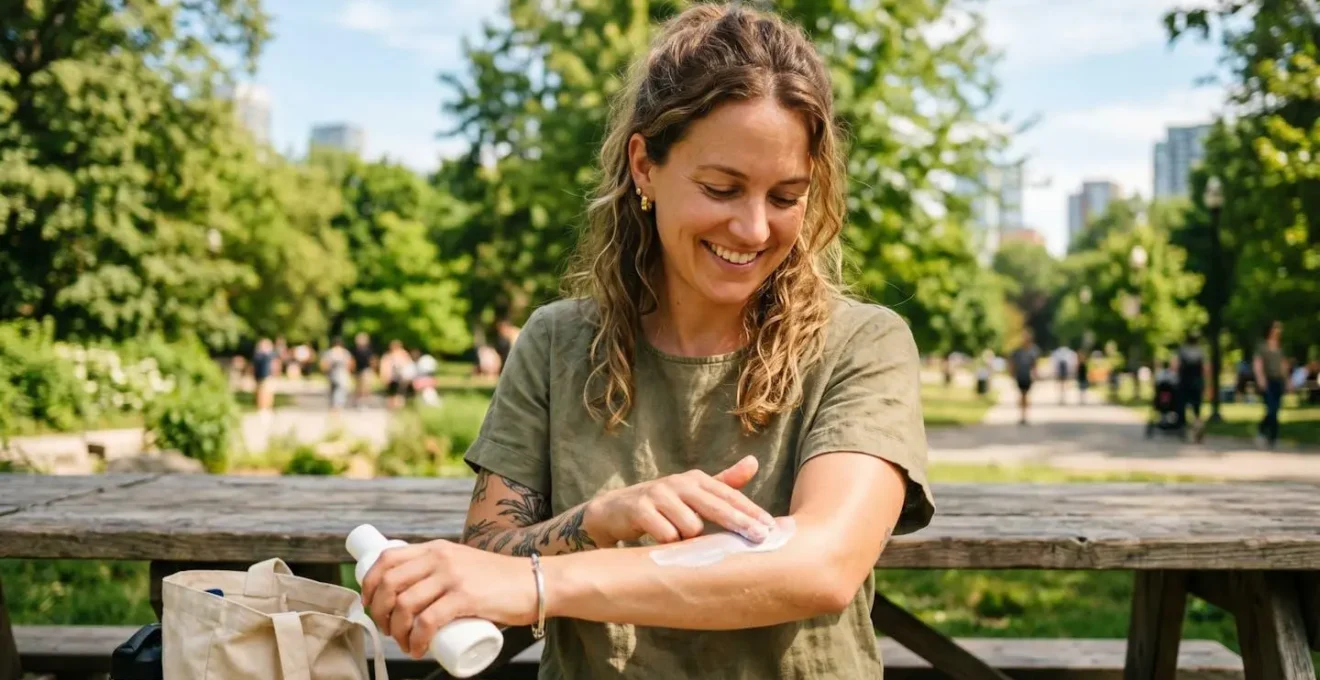
Dermatologists do not simply recommend sunscreen as a cosmetic habit — they recommend it as a frontline medical intervention. Every time skin is exposed to ultraviolet radiation, whether during a school run, a lunch break, or a drive home in January, cumulative cellular damage accumulates. According to the World Health Organization’s report on UV radiation and skin cancer, UV exposure is the primary cause of skin cancer, with 1.5 million new cases recorded globally in 2022. That figure does not discriminate by season, skin tone, or how long someone spent outdoors that day.
For informational purposes only: This content is provided for informational purposes only and does not constitute medical advice. Consult a qualified healthcare professional or dermatologist for personalized recommendations regarding your skin health.
UV-induced skin damage is cumulative and largely irreversible. Dermatologists recommend applying a broad-spectrum SPF 30 or higher every single day because no threshold of “safe” daily exposure exists. Even incidental sun exposure — commuting, working near a window, walking between buildings — contributes to long-term cellular deterioration and raises lifetime skin cancer risk.
What UV radiation actually does to skin cells
Ultraviolet radiation travels in two forms that reach ground level: UVA and UVB. UVB rays are the ones responsible for sunburn — the visible, acute reaction most people associate with “too much sun.” UVA rays, however, penetrate deeper into the dermis and cause damage that produces no immediate signal. Skin struck by UVA radiation absorbs energy that breaks apart DNA strands within keratinocytes and melanocytes, the cells that give skin its structure and colour.
The mechanism matters because it explains why sunscreen cannot be reserved for beach days alone. A cloudy day in Montreal still allows up to 80% of UV radiation to pass through cloud cover, according to data cited by Health Canada’s sun safety guidelines. The absence of heat or visible sun does not signal the absence of UV. This is a distinction that dermatologists consistently emphasize in clinical practice, yet one that remains widely misunderstood among the general public.
Repeated unrepaired DNA breaks in skin cells are the biological pathway to both premature photoaging — the kind that produces fine lines, pigmentation, and loss of elasticity years before biological age would cause it — and, critically, to the mutations that initiate squamous cell and basal cell carcinomas. For a comprehensive range of Euro-Pharmas sunscreen and skin protection products selected for their quality and traceability, daily UV defence can be built into a routine without complexity.

The year-round case: why Montreal winters don’t offer a break
One of the most persistent misconceptions observed in patient education is that sun protection is a summer concern. In Canadian climates, where winter stretches across five or six months and overcast skies dominate much of the year, the instinct to store sunscreen beside the beach bag feels intuitive — but it runs directly against what dermatological evidence supports.
Snow reflects up to 80% of UV rays back upward, meaning that a walk across a snowy Montreal parking lot effectively doubles UV exposure compared to the same walk on bare pavement. Skiers and outdoor workers at higher altitudes face compounding effects: UV intensity increases roughly 4% for every 300 metres of elevation gain. These are not marginal risks. They represent precisely the kind of cumulative exposure burden that dermatologists point to when explaining why the recommendation is daily, not seasonal.
Indoor settings are not entirely exempt either. UVA rays penetrate standard window glass, which means hours spent working near a window or driving during daylight hours contribute to the daily UV load. Car windshields provide partial filtering, but side windows in most vehicles offer substantially less protection. For anyone logging long hours at a desk beside a glass facade in a downtown Montreal office, the photoaging risk from untreated window exposure is clinically documented.
The Canadian Dermatology Association formally recommends year-round daily sunscreen application as part of its national skin cancer prevention guidelines, framing the habit not as an aesthetic choice but as a public health intervention equivalent in importance to wearing a seatbelt — routine, non-negotiable, and most valuable precisely because it operates before any symptom appears.
Common assumption: Sunscreen is only necessary in summer or on sunny days.
Reality: UV radiation reaches skin year-round. Snow reflects up to 80% of UV rays, clouds block only a fraction, and UVA penetrates window glass. Seasonal restriction of sunscreen use leaves skin unprotected during the majority of annual exposure hours.
Understanding why the recommendation is framed as a daily obligation — rather than a situational precaution — requires looking at the population-level data on what happens when that habit is absent. That data is unambiguous.
What SPF level dermatologists actually recommend
SPF, or Sun Protection Factor, measures a sunscreen’s capacity to filter UVB radiation. An SPF 30 product allows roughly 3% of UVB rays to reach the skin, while SPF 50 reduces that to 2%. The difference between SPF 30 and SPF 50 in laboratory conditions is real but narrow — what matters far more in practice is whether the product is applied at all, and whether it is reapplied after two hours of continuous outdoor exposure or after sweating and swimming.
The American Academy of Dermatology sets its minimum daily recommendation at SPF 30, broad-spectrum (covering both UVA and UVB), applied 15 minutes before outdoor exposure. For everyday use in an urban Canadian context — commuting, errands, working outdoors — SPF 30 to SPF 50 covers the clinically justified range. Higher SPF values offer diminishing marginal returns and are primarily relevant for extended outdoor activity, not routine daily use.
Broad-spectrum coverage is the non-negotiable criterion. A product that only addresses UVB protects against sunburn but leaves the deeper UVA damage pathway entirely open. Most modern sunscreens sold in Canadian pharmacies meet broad-spectrum standards, but verifying this on the label remains a practical step worth taking.
Application quantity matters: Studies consistently show that most people apply only 25–50% of the recommended amount of sunscreen. Dermatologists recommend using approximately two milligrams per square centimetre of skin — roughly a teaspoon for the face alone. Under-application proportionally reduces effective SPF protection.
A scenario that illustrates the practical stakes: imagine a person who applies SPF 50 sunscreen every morning but uses roughly a quarter of the recommended volume. In practice, the protection that reaches their skin is closer to SPF 10 — below the minimum threshold recommended for any sun exposure. The product was technically correct; the application was not. This gap between theoretical and real-world protection is one of the core reasons dermatologists emphasize not just which product to use, but how to use it.
Checking in on your broader skin health routine is also worthwhile. A guide to fortify your skin barrier covers complementary protective strategies that work alongside daily sunscreen, particularly relevant for Montreal’s harsh winter conditions where cold wind and dry air accelerate transepidermal water loss.
Sunscreen and skin cancer: what the data shows
The WHO’s epidemiological analysis, which recorded 1.5 million new skin cancer cases globally in 2022, anchors the public health argument for daily sunscreen in a way that anecdote cannot. Skin cancer is not a rare or unlucky outcome — it is the statistically predictable consequence of cumulative unprotected UV exposure over years and decades. What makes it unusual among cancers is that the primary causal factor is external, visible, and largely preventable.
1.5 million
New skin cancer cases recorded globally in 2022, with UV radiation identified as the primary cause
The protection equation is straightforward in principle: consistent daily sunscreen use reduces the cumulative UV dose reaching skin cells, which reduces the frequency of UV-induced DNA mutations, which reduces the probability of those mutations escaping cellular repair mechanisms and progressing toward malignancy. Long-term prospective studies have demonstrated that regular sunscreen use reduces the incidence of squamous cell carcinoma and, to a meaningful degree, melanoma — the most lethal form of skin cancer.
Beyond cancer, the anti-aging argument carries its own weight. Photoaging — skin changes driven by UV exposure rather than biological aging — is responsible for the majority of visible skin aging signs observed before the age of 60. Dermatologists frequently note that the single most effective anti-aging intervention available over the counter is a broad-spectrum sunscreen applied consistently. No serum, retinoid, or cosmetic treatment addresses upstream UV damage once it has occurred; sunscreen prevents it from happening in the first place.