Neurostimulation is not a last resort; it’s a proactive strategy to regain control from chronic pain by directly intercepting pain signals before they reach the brain.
- The process in Quebec involves a clear qualification pathway, from specialist referral to a successful trial period that demonstrates efficacy.
- Understanding your RAMQ and private insurance coverage for the device, surgery, and essential aftercare is crucial for financial planning.
Recommendation: Begin by discussing your eligibility for a neurostimulation trial with your pain management specialist or neurologist to see if it’s the right next step for you.
For many living with chronic neuropathic pain, the journey is a frustrating cycle of hope and disappointment. You’ve likely tried countless medications, from anticonvulsants to opioids, each with its own diminishing returns and unwelcome side effects. Injections and nerve blocks may have offered temporary respite, but the pain, a constant and unwelcome companion, always returns. It’s easy to feel like you’ve reached the end of the line, that this is simply your reality now. This feeling is particularly acute for patients with complex conditions like Multiple Sclerosis (MS) or failed back surgery syndrome, where pharmaceutical options have been exhausted.
But what if the solution wasn’t about adding another chemical to your system, but about changing the conversation your nerves are having with your brain? This is the fundamental promise of neurostimulation. Instead of viewing it as a final, desperate measure, we must reframe it as a proactive, targeted intervention. It represents a technological and therapeutic partnership designed to give you, the patient, a significant measure of control back. This guide is built to demystify this advanced treatment, moving beyond the simple idea of ‘blocking pain’ to illuminate the concrete, patient-driven pathway available to residents of Quebec. We will explore how this technology works, the specific steps to qualify for it within the Quebec healthcare system, how to navigate insurance, and what life looks like with this new level of control.
To provide a clear roadmap for your journey, this article breaks down the essential aspects of neurostimulation for chronic pain management in Quebec. From the underlying science to the practical steps for approval and daily living, each section is designed to empower you with the knowledge needed to have an informed conversation with your medical team.
Summary: Your Guide to Neurostimulation for Chronic Pain
- Why Does a « Pacemaker for Pain » Stop Signals Before They Reach the Brain?
- How to Qualify for DBS Surgery for Parkinson’s in Quebec?
- Corticosteroids vs Biologics: Which Stops MS Lesions More Effectively?
- The Infection Risk of Implanted Neurostimulators You Can’t Ignore
- How to Adjust Your Neurostimulator Settings to Double Battery Life?
- Why Is the « Annual Maximum » More Important Than the Co-Pay %?
- How to Get RAMQ Approval for « Exception Drugs » Not on the List?
- 1.5T vs 3T MRI: Which Machine Should You Choose for Brain Imaging?
Why Does a « Pacemaker for Pain » Stop Signals Before They Reach the Brain?
When you suffer from chronic neuropathic pain, it feels as though your nerves are screaming a constant, unrelenting message to your brain. Traditional medications try to muffle that scream, often with systemic side effects. Neurostimulation, often called a « pacemaker for pain, » takes a more direct approach. It doesn’t muffle the scream; it changes the message entirely. The technology works on a principle known as neural gating. An implanted device delivers tiny, precise electrical pulses to the spinal cord or specific peripheral nerves. These pulses create a new, non-painful sensation that effectively ‘closes the gate’ on the pain signals, preventing them from ever reaching the brain’s perception centers.
Instead of pain, you might feel a gentle tingling, or with modern high-frequency systems, nothing at all—just the absence of pain. This isn’t masking; it’s sophisticated signal interception. The goal is a significant reduction in perceived pain, allowing for what we call functional restoration. This is more than just feeling less pain; it’s about reclaiming your life. It’s about walking tall again, engaging with family, and returning to activities you thought were lost forever. The problem of chronic pain is widespread, and for those who have found no relief, this technology represents a tangible shift in their treatment journey.

This journey toward functional restoration is a structured pathway, beginning with a simple referral and leading toward a new reality. The power of this transformation is best seen through real-world examples, where the focus shifts from managing debilitating symptoms to celebrating renewed ability and presence in one’s own life.
Case Study: The Veteran’s Transformation
A young veteran, who had endured debilitating pain for ten long years and relied on a cane, received a spinal cord stimulator. When he attended a family reunion a short time later, some relatives he hadn’t seen in years didn’t even recognize him. He was walking tall and proud, without his cane. The constant pain was gone, replaced by a visible happiness and a restored sense of self.
How to Qualify for DBS Surgery for Parkinson’s in Quebec?
While this section title mentions Deep Brain Stimulation (DBS) for Parkinson’s, the qualification pathway shares a core philosophy with all neurostimulation therapies in Quebec, including those for chronic pain. It is not a decision made lightly. It is a meticulous, multi-disciplinary process designed to ensure that you are the right candidate and that the therapy has the highest possible chance of success. This « Patient Qualification Pathway » is a critical step that empowers both you and your medical team.
The journey begins with a referral to a specialist, typically a neurologist or pain management doctor at a centre like the CHUM or MUHC in Montreal. The fundamental requirement is that you have tried and failed multiple conservative treatments, including various classes of medication and physical therapies. The team needs to see a documented history of chronic, intractable pain that significantly impacts your quality of life. As noted in a review by Abbott, a leading manufacturer, « It is extremely important to select patients appropriately for neurostimulation. Thorough psychiatric screening should be performed. » This ensures you are psychologically prepared for the process and have realistic expectations.
The cornerstone of qualification is the screening trial. Before any permanent implant, a temporary lead is placed, and for about a week, you « test drive » the therapy. You’ll keep a detailed log of your pain levels and activities. The goal is to see if the stimulation provides significant relief. This trial period is the most definitive way to determine if the therapy will be a long-term success for you, and it’s a key piece of evidence for both your medical team and any insurance approvals.
Corticosteroids vs Biologics: Which Stops MS Lesions More Effectively?
The question of choosing between Corticosteroids and Biologics for Multiple Sclerosis highlights a critical concept in managing complex neurological conditions: not all treatments are created equal, and the right choice depends on the specific mechanism and goal. The same principle applies directly to neurostimulation for chronic pain. It’s not a single therapy but a category of treatments, each with unique strengths. Understanding these differences is key to a successful therapeutic partnership between you and your device.
For patients and clinicians, selecting the right type of neurostimulation is as crucial as choosing the right drug for MS. The main options include Spinal Cord Stimulation (SCS), Peripheral Nerve Stimulation (PNS), and Dorsal Root Ganglion (DRG) stimulation. For example, a systematic review has shown that for conditions like complex regional pain syndrome (CRPS), a specific type of neuropathic pain, dorsal root ganglion stimulation is often recommended over traditional SCS due to its ability to target pain in a more focused area. Your doctor will determine the best approach based on the location and nature of your pain.
The following table, drawing from clinical evidence, provides a high-level comparison of different neurostimulation modalities. It illustrates how evidence quality and primary indications vary, helping to guide the selection process for refractory pain cases.
| Treatment Type | Evidence Quality | Primary Indication | Success Rate |
|---|---|---|---|
| Spinal Cord Stimulation | Low-to-moderate | Failed back surgery syndrome | Superior to reoperation |
| Peripheral Nerve Stimulation | Low-to-moderate | Neuropathic pain in extremity | Effective |
| TENS | Low quality | Neuropathic pain | Superior to sham |
| Deep Brain Stimulation | Mixed evidence | Refractory cases (off-label) | Variable |
The Infection Risk of Implanted Neurostimulators You Can’t Ignore
Any surgical procedure carries risks, and it’s essential to approach neurostimulator implantation with a clear understanding of them. The primary risk associated with any implanted device is infection. While the rates are low, they are not zero. Transparency about this risk is the first step toward mitigating it. The key is to transform concern into proactive prevention. Your surgical team in Montreal will have stringent protocols in place, but your role as the patient in post-operative care is equally vital for a safe and successful outcome.
The risk is manageable and has been studied extensively. For instance, a large database analysis found a 3.11% device-related infection rate within 12 months of the initial implant surgery. This figure highlights that while the vast majority of patients have no issues, a small percentage do, which is why adherence to post-operative instructions is non-negotiable. Signs of infection include unusual redness, swelling, drainage from the incision site, or a fever. Being vigilant and communicating immediately with your specialist if you notice any of these signs is your most powerful tool.
Empowerment comes from knowing exactly what to do to protect yourself. Your surgeon will provide specific instructions, but they generally follow a standard protocol focused on cleanliness, monitoring, and timely communication. Following these steps diligently is the best way to ensure your implant site heals perfectly, setting you up for a long and successful journey with your new therapy.
Your Action Plan: Post-Operative Infection Prevention
- Monitor the surgical site daily for any signs of increasing redness, swelling, warmth, or fluid drainage.
- Take your full course of prophylactic antibiotics as prescribed by your surgeon, even if you feel fine.
- Keep the incision sites perfectly clean and dry, following the specific bathing and dressing change instructions from your care team.
- Contact your specialist’s office immediately if you develop a fever (typically over 38°C or 100.4°F) or if pain at the implant site suddenly worsens.
- Attend all scheduled follow-up appointments, as they are crucial for professional wound assessment and early detection of any issues.
How to Adjust Your Neurostimulator Settings to Double Battery Life?
One of the most empowering aspects of neurostimulation therapy is the control it hands back to you. After the implant, you are given a small, remote-like patient controller. This device is your connection to the neurostimulator, allowing you to turn the therapy on or off, switch between different programs, and adjust the intensity of the stimulation. This isn’t a « set it and forget it » treatment; it’s a dynamic therapeutic partnership where your feedback and adjustments are key to long-term success. While « doubling » battery life is a simplification, you can absolutely make choices that significantly extend it.
The battery life of your implantable pulse generator (IPG) depends entirely on its settings: the amplitude (intensity), pulse width, and frequency (pulses per second) of the electrical signal. Higher settings provide stronger stimulation but consume more power. Your clinician will create several programs for you, perhaps one for high-pain days and another, more energy-efficient program for better days or for when you sleep. Learning to use the right program at the right time is the first step to maximizing battery longevity. For rechargeable systems, this means less frequent charging sessions. For non-rechargeable systems, it means a longer interval before a replacement surgery is needed.
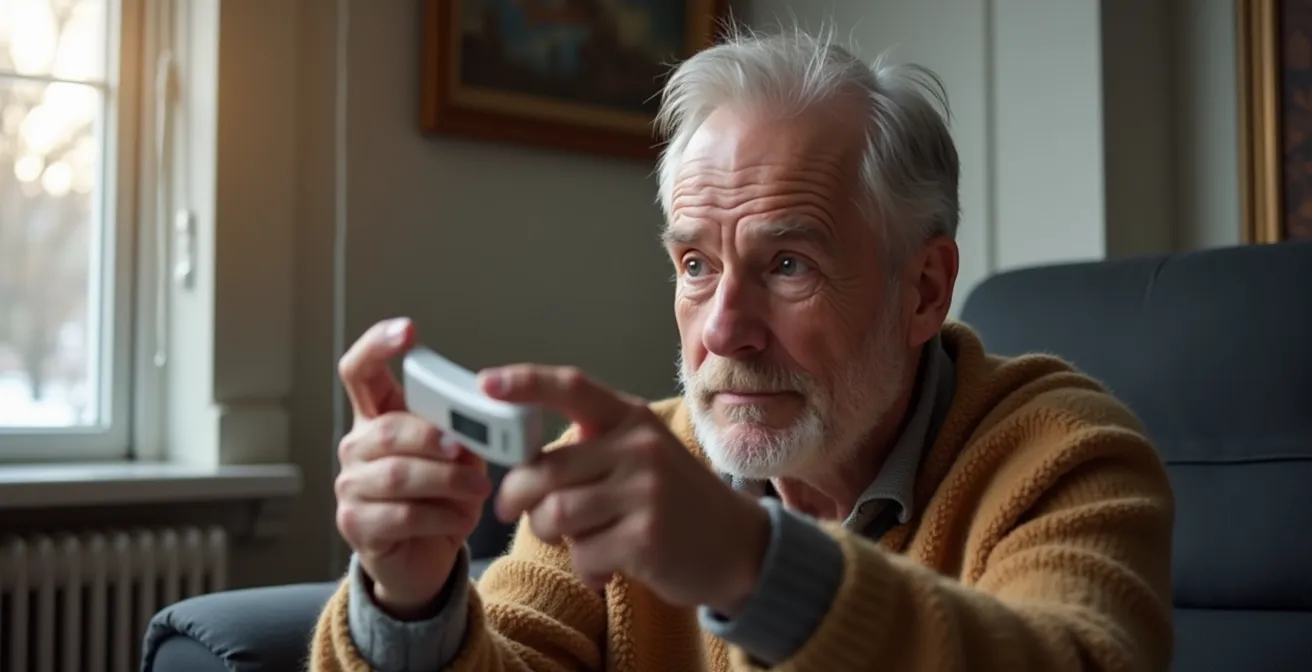
Mastering your controller is about finding the « sweet spot »—the lowest possible setting that still provides adequate pain relief for your current activity level. It’s a skill you develop over time, in collaboration with your pain specialist. This daily interaction with the technology is a constant reminder that you are an active participant in your own care, fine-tuning your relief to fit the rhythm of your life.
Key Takeaways
- Neurostimulation is a proactive therapy that works by changing pain signals, not just masking them, to enable functional restoration.
- The qualification process in Quebec is a structured, multi-disciplinary pathway designed to maximize the chances of a successful outcome.
- You are an active partner in your therapy, with the ability to adjust settings to balance pain relief and device battery life.
Why Is the « Annual Maximum » More Important Than the Co-Pay %?
Navigating the financial side of advanced medical treatment in Quebec requires understanding the interplay between the public system (RAMQ) and private insurance. When considering neurostimulation, the sticker price of the device and surgery can seem daunting, but these are often fully covered by RAMQ once you are approved. The real financial challenge often lies in the associated services, and this is where the details of your private plan—specifically the annual maximums—become far more important than a simple co-pay percentage.
A low co-pay of 10% might seem great, but 10% of a large number is still a large number. More importantly, services crucial for your recovery and long-term success, like physiotherapy and psychological support, are often not covered by RAMQ or have very limited coverage. Your private insurance plan will cover these, but almost always up to a fixed annual dollar amount. For example, if your plan covers $2,000 in physiotherapy per year, you will be paying 100% out-of-pocket once you exceed that maximum, regardless of your co-pay. The long-term health benefits can also have a financial upside, as a Healthline review notes that more than 60% of people reduce or eliminate opioid use after switching to spinal cord stimulation, which can lead to significant savings on prescription costs.
Before proceeding, it is essential to have a clear conversation with your private insurance provider. Ask specific questions about annual maximums for physiotherapy, psychology, and any other paramedical services recommended by your doctor. Understanding these limits is the key to effective financial planning for your neurostimulation journey.
| Coverage Aspect | Public (RAMQ) | Private Insurance |
|---|---|---|
| Device & Surgery | Covered (with approval) | Usually requires pre-approval |
| Post-op Physiotherapy | Limited coverage | Annual maximum applies ($1,500-3,000 typ.) |
| Psychology Services | Not covered | Annual maximum applies |
| Battery Replacement | Covered after waiting period | Varies by plan |
How to Get RAMQ Approval for « Exception Drugs » Not on the List?
The process of getting approval from the Régie de l’assurance maladie du Québec (RAMQ) for something not on the standard list—whether it’s an « exception drug » or an advanced medical device like a neurostimulator—follows a similar logic. The system is designed to provide the best standard of care first, and you must demonstrate why that standard is not sufficient for your specific case. This process is known as a request for an exceptional medication or, in this case, an exceptional procedure.
Your specialist is your primary advocate in this process. They must assemble a comprehensive file that provides a compelling clinical justification. This file will document your entire history: all the medications you’ve tried from different drug classes and why they failed or caused intolerable side effects. The core of the request is proving that you are « refractory » to standard treatments. For neurostimulation, the file will be bolstered by the results of your screening trial. A successful trial, where at least 50% pain reduction is achieved, is the strongest possible evidence that this therapy is not just a hope, but a clinical necessity for you.
The paperwork can be demanding, but it is a structured process. Your specialist’s administrative team is experienced in compiling these requests for RAMQ. They will complete the official forms, attach the detailed justification letter, and include any relevant clinical data. While initial denials can happen, there is a formal review (révision) process. Being prepared and persistent is key. Your participation and documented experience from the trial are invaluable assets in this journey.
1.5T vs 3T MRI: Which Machine Should You Choose for Brain Imaging?
For many patients with chronic conditions, regular diagnostic imaging like MRIs is a fact of life. Historically, having an implanted electronic device like a neurostimulator was an absolute contraindication for an MRI. The powerful magnetic fields could potentially damage the device or harm the patient. This created a difficult choice for many. However, technology has evolved significantly, offering a new level of freedom and safety.
As pain medicine specialist Dr. Eric K. Fanaee explains, this concern is rooted in the powerful magnetic fields used by the imaging machines:
MRI scans are generally contraindicated because the strong magnetic fields can disrupt the device. Some newer spinal cord stimulator models are MRI-compatible
– Dr. Eric K. Fanaee, Board Certified Pain Medicine Specialist
The key term today is « MR Conditional. » Many modern neurostimulators are designed to be safe for MRI scans under specific conditions. This means that while you can’t just go to any imaging center, you absolutely can get an MRI if needed. Manufacturers like Abbott note that some models are MR Conditional, which allows for safe scanning when protocols are followed. This involves putting the device into a special « MRI mode » and ensuring the imaging center uses the correct machine and settings. The choice between a 1.5 Tesla (1.5T) and a 3 Tesla (3T) MRI machine often comes down to device compatibility, as 1.5T machines are more commonly approved for use with implants.
This is a critical conversation to have with your neurosurgeon before your implant. If you know you will require ongoing MRIs, they will prioritize selecting an MR Conditional device. While this might mean longer wait times for specialized 3T scans in the Quebec system, it preserves your access to essential diagnostic tools without compromising your pain therapy.
| MRI Type | Compatibility | Required Protocol | Wait Time Impact (in Quebec) |
|---|---|---|---|
| 1.5T MRI | More compatible models | Standard MR-conditional protocol | Shorter wait times |
| 3T MRI | Limited compatible models | Specialized protocol required | Longer wait times |
| Device Removal | All MRI types possible | Surgical removal needed | Rarely necessary now |
Your journey with chronic pain has been long, but it does not have to be a life sentence. Neurostimulation offers a proven, technology-driven path toward reclaiming your function and your joy. The next logical step is to take this information and open a dialogue. Schedule a consultation with your neurologist or a pain management specialist in Quebec to discuss your specific case and explore if you are a candidate for a neurostimulation trial.