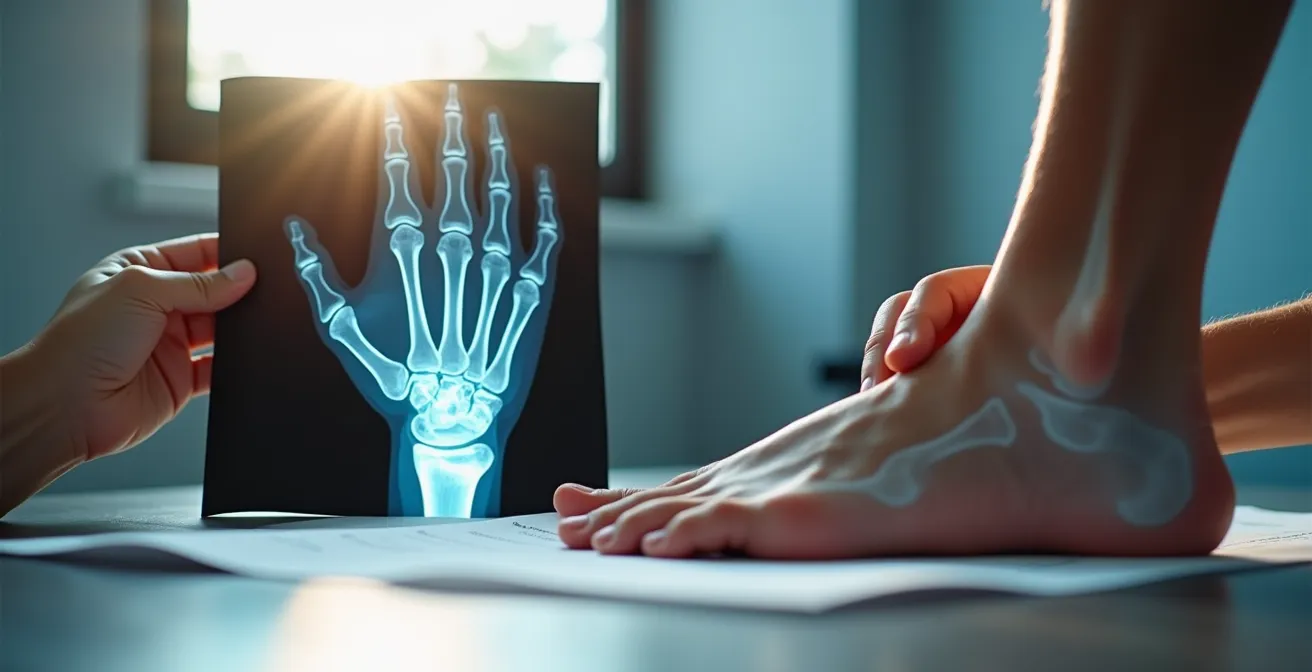
After a fall on ice in Montreal, the most critical question isn’t « Is it broken? » but « What is the right care pathway to avoid a 10-hour ER wait? ».
- A simple wrist fracture without obvious deformity is often triaged as non-urgent (P4/P5) in a hospital, leading to extensive wait times.
- Private clinics and Info-Santé 811 offer faster, more direct routes to diagnosis and specialized care for many orthopedic injuries.
Recommendation: Use this guide’s triage protocol to assess your symptoms and choose the most efficient care option, saving you time and ensuring proper healing.
The crack of ice underfoot, a sudden loss of balance, and a hard impact on an outstretched hand—it’s an all-too-common Montreal winter scenario. Now, a throbbing wrist leaves you with a critical question: is it a simple sprain or a more serious fracture? While the immediate instinct for many is to head to the nearest emergency room, that may not be the most effective or efficient choice in the Quebec healthcare system. The standard advice to apply ice and wait it out can be risky, but spending half a day in a crowded waiting room for a non-critical injury is a draining prospect.
This guide offers a different perspective, one borrowed from an orthopedic triage nurse. We will shift the focus from a definitive self-diagnosis, which is impossible without an X-ray, to a more practical and empowering process: a triage protocol. The goal is not just to understand the potential injury, but to navigate Montreal’s unique healthcare landscape to get the right care, at the right time. We will move beyond the generic R.I.C.E. protocol and explore the specific signs that help you choose between calling Info-Santé 811, booking an appointment at a private fracture clinic, or committing to the hospital ER.
Forget trying to be a radiologist. Your first job is to be an efficient navigator. This article will provide the framework to assess your situation, understand the risks of waiting, and identify the care pathway that leads to the fastest and most effective recovery, ensuring a winter mishap doesn’t sideline you for the rest of the season.
This article provides a structured approach to making an informed decision after a fall. The following sections will guide you through understanding the context of winter injuries in Montreal, evaluating your care options, and taking control of your recovery process.
Summary: Your Triage Guide After a Fall on a Montreal Sidewalk
- Why Are Wrist Fractures the Most Common Winter Injury in Montreal?
- How to Skip the ER Wait Time for a Broken Bone in Montreal?
- Cast or Removable Splint: Which Heals Ankle Fractures Faster?
- The Risk of ‘Malunion’ If You Ignore a Finger Fracture for 3 Weeks
- What to Eat to Speed Up Bone Calcification by 20%?
- Frostnip vs Frostbite: How to Spot the Difference on Children?
- The 10-Hour Mistake: Going to the ER for a Condition Rated P4 or P5
- How to Accelerate Recovery After Knee Replacement Surgery in Your 60s?
Why Are Wrist Fractures the Most Common Winter Injury in Montreal?
Every Montrealer knows the treacherous nature of the city’s sidewalks from December to March. A thin, almost invisible layer of black ice is all it takes to cause a fall. When we slip, our instinct is to throw our hands out to break the fall—a protective reflex known as the Fall On an Outstretched Hand (FOOSH). Unfortunately, this action concentrates the entire force of the impact onto the small bones of the wrist, particularly the distal radius. This makes wrist fractures the leading type of orthopedic injury during icy seasons.
The frequency of these incidents is not just anecdotal. Local health networks see a dramatic and predictable increase in specific injuries coinciding with winter weather events. In fact, following a period of freezing rain or a sudden thaw-freeze cycle, Montreal’s emergency centers consistently see admissions for ice-related falls skyrocket. According to data from the McGill University Health Centre, ice-related admissions can often triple after a storm, with wrist fractures, ankle fractures, and head trauma being the most common diagnoses.
This seasonal surge puts immense pressure on the public healthcare system. Understanding this context is the first step in making a smarter decision for your own care. Knowing you’re part of a city-wide statistical peak helps explain why the standard « go to the ER » advice might lead to a frustratingly long wait. Your individual injury, while significant to you, is one of hundreds that the system must absorb on any given icy day.
This reality necessitates a more strategic approach to seeking care, moving beyond the default ER visit to consider more efficient pathways available within the city.
How to Skip the ER Wait Time for a Broken Bone in Montreal?
You’ve fallen, your wrist is in pain, and you suspect it might be broken. The default option is the hospital ER, but this often means committing to an 8 to 12-hour wait, especially during peak winter periods. The key to a better experience is understanding that for many orthopedic injuries, the ER is not the only, or even the best, option. A proper triage of your situation starts with knowing the alternatives available to every Montreal resident.
Your primary options form a three-tiered system: the immediate guidance of Info-Santé 811, the specialized and rapid access of a private fracture clinic, and the comprehensive but often slow-moving hospital ER. Calling 811 is an excellent first step for guidance, where a nurse can help you assess your symptoms and recommend a course of action. However, for a suspected fracture that doesn’t involve severe deformity or an open wound, a private clinic can be the most efficient pathway.
These specialized clinics offer direct access to orthopedic specialists and on-site imaging, often with an appointment secured in under two weeks. While there is a cost, many services may be covered by private insurance, and the trade-off for avoiding a full day in the ER is significant for many. The choice depends on the severity of your injury and your personal circumstances.
The following table, based on information from specialized Montreal orthopedic service providers, breaks down the key differences between your primary care options for a suspected fracture.
| Care Option | Wait Time | Cost | Services |
|---|---|---|---|
| Hospital ER | 8-12+ hours | Free (RAMQ) | Full emergency care |
| Private Fracture Clinic | 2 weeks or less | Variable (may be insured) | Direct specialist access, on-site imaging |
| Info-Santé 811 | Immediate phone consult | Free | Triage guidance |
Ultimately, knowing these options exist transforms you from a passive patient waiting in a queue to an active participant in your own healthcare journey.
Cast or Removable Splint: Which Heals Ankle Fractures Faster?
Once you receive a diagnosis, the conversation turns to treatment. The traditional image of a heavy, cumbersome plaster cast is slowly being replaced by more modern and functional alternatives. While this section’s title refers to ankles, the principles of immobilization apply to many types of stable fractures, including those of the wrist. The choice between a non-removable cast and a removable splint is a key decision that impacts comfort, hygiene, and the speed of your rehabilitation.
A waterproof fibreglass cast offers rigid immobilization, which is essential for unstable or displaced fractures. Its main advantage is that it cannot be removed, ensuring the bone remains in the optimal position for healing. However, this rigidity comes at a cost: it can be cumbersome, itchy, and complicates hygiene. More importantly, it prevents the initiation of early physiotherapy.
This is where a removable splint or air-cast comes in. For stable fractures, where the bone fragments are properly aligned, a splint provides adequate support while offering significant advantages. It allows for the removal for cleaning, skin inspection, and, most crucially, for performing gentle range-of-motion exercises. This concept of early, controlled mobilization is a cornerstone of modern orthopedic recovery, helping to prevent joint stiffness and muscle atrophy.
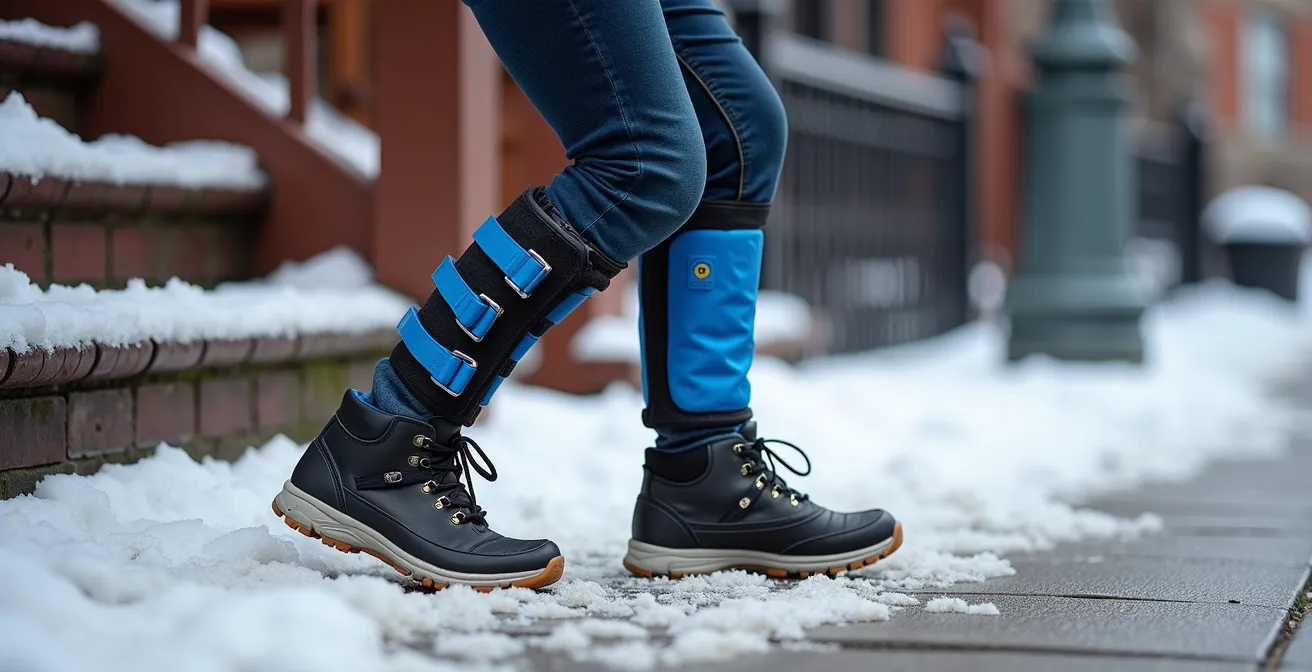
As you can see, each option has its place depending on the specific injury. The decision is not about which is universally « faster, » but which is most appropriate for your specific fracture type to facilitate the best long-term outcome. As noted by Montreal-based sports medicine expert Dr. Jean-Marc Toueg, modern treatment protocols often favor removable splints for stable fractures to allow for early, controlled physiotherapy, which can significantly shorten the overall recovery timeline.
Modern treatment protocols used by Montreal sports medicine clinics often favor removable splints for stable fractures to allow for early, controlled physiotherapy.
– Dr. Jean-Marc Toueg, Canadian Private Surgical Clinic Montreal
This shift towards functional recovery highlights the importance of seeing a specialist who can tailor the treatment to your specific injury and lifestyle needs.
The Risk of ‘Malunion’ If You Ignore a Finger Fracture for 3 Weeks
« I’ll just tough it out and see if it gets better. » This is a common response to injuries that don’t seem « that bad, » especially for jammed fingers or a wrist that isn’t visibly deformed. However, this mindset carries a significant risk: the possibility of a fracture healing incorrectly. This complication is known as a malunion, and it can lead to chronic pain, stiffness, and loss of function that is far more difficult to treat than the original injury.
The concept applies to any bone, but is particularly relevant for the complex joints of the hand and wrist. A bone that is even slightly misaligned when it heals can alter the joint’s mechanics permanently. Consider the real-world experience of a patient who presented at a Montreal clinic with a crooked, stiff finger three weeks after jamming it while clearing ice from their car. What seemed like a minor injury was a fracture that had already begun to heal in the wrong position. The delayed diagnosis meant treatment was no longer a simple splint, but required more complex intervention, including potential surgery and extended hand therapy to try and restore function.
A patient presented with a crooked, stiff finger three weeks after jamming it while clearing ice from their car. The delayed diagnosis required more complex treatment including potential surgery and extended hand therapy, highlighting the importance of early assessment even for seemingly minor injuries.
– Private Orthopedic Surgery Clinic, Union MD
This is why the « wait and see » approach can be a trap. While a sprain should show signs of improvement within a week or two, a fracture will not. As medical experts warn, a sprain that is not healing as expected or pain that remains intense could be the key sign of an undiagnosed fracture. The initial window for simple, non-invasive treatment is short. Once the bone begins to set, the options for correction become more limited and invasive.
Therefore, persistent pain, swelling, or any limitation in movement following an injury warrants a professional medical assessment to rule out a fracture and prevent long-term complications.
What to Eat to Speed Up Bone Calcification by 20%?
While proper medical treatment is the foundation of healing a fracture, your body is doing the real work of knitting the bone back together. This process, known as bone calcification, is a demanding metabolic task that requires specific nutritional building blocks. You can actively support and potentially accelerate this process by focusing on a targeted diet. Think of it as supplying your internal construction crew with the highest quality materials.
The two most critical nutrients for bone healing are calcium and Vitamin D. Calcium is the primary mineral that gives bone its strength, but your body cannot absorb it effectively without adequate Vitamin D. This is particularly important during a Montreal winter, when reduced sun exposure leads to widespread Vitamin D deficiency. To ensure you are meeting your needs, Health Canada recommends that adults get at least 600 IU of vitamin D daily, and at least 800 IU if you’re over 70. This often requires supplementation during winter months.
Beyond these two stars, other nutrients play vital supporting roles. Vitamin C is essential for producing collagen, the protein matrix that forms the « scaffolding » for new bone. Protein itself is crucial, providing the amino acids needed for all tissue repair. Finally, the amino acid lysine has been shown to enhance calcium absorption and aid in the regeneration of the bone matrix.
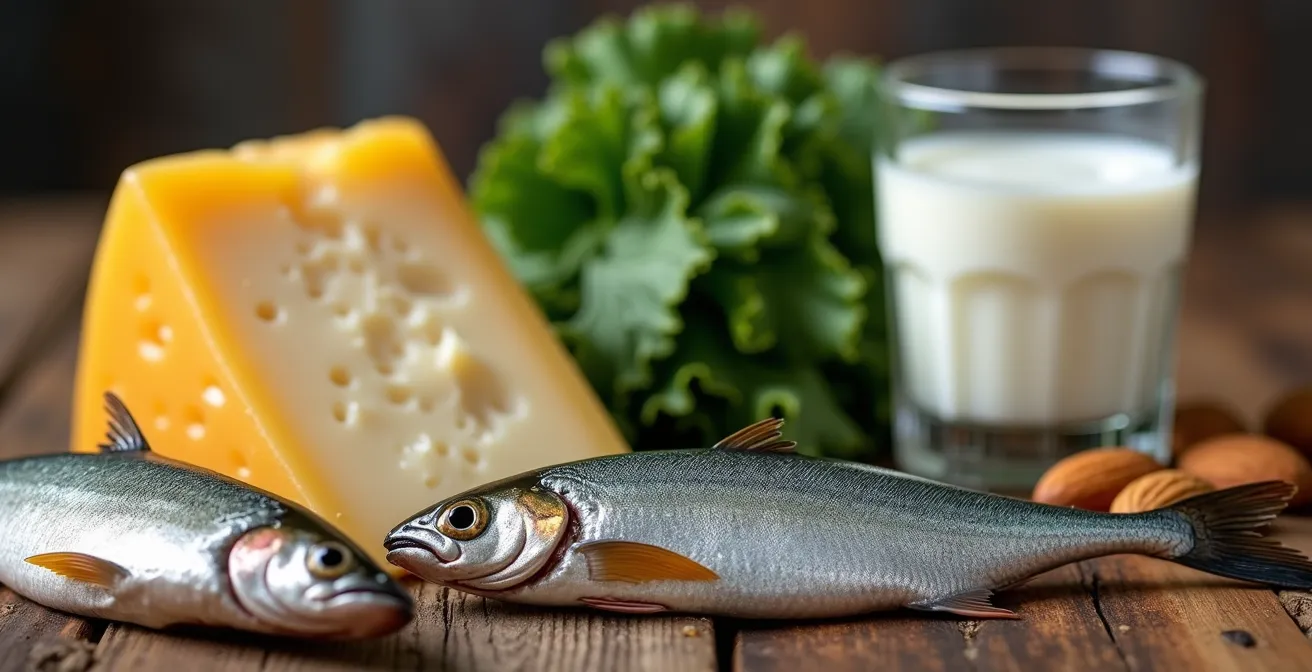
To put this into practice, focus on incorporating a variety of nutrient-dense foods into every meal. Here is an evidence-based list of foods to prioritize:
- Calcium-Rich Foods: Prioritize dairy products like milk, cheese, and yogurt. For non-dairy options, focus on dark leafy greens such as collard greens, bok choy, and kale, as well as fortified plant-based milks.
- Quality Protein: Ensure a source of protein at every meal. This includes meat, fish (especially sardines with their edible bones), eggs, nuts, and legumes like beans and lentils.
- Vitamin C Sources: Citrus fruits are a classic choice, but bell peppers, strawberries, and broccoli are also excellent sources. A single orange can meet your daily requirement.
- Lysine-Rich Foods: Found in red meat, fish, and dairy products, as well as soybeans (tofu, edamame) and quinoa.
By consciously fueling your body for repair, you can play an active role in shortening your recovery time and building stronger, healthier bone.
Frostnip vs Frostbite: How to Spot the Difference on Children?
A fall on the ice is often the main event, but any extended time spent in Montreal’s cold can bring a secondary risk, especially for children: cold-related skin injuries. As a triage nurse, it’s essential to differentiate between the mild, reversible condition of frostnip and the far more serious, tissue-damaging condition of frostbite. Understanding the signs is key to knowing when to simply warm up at home and when to seek immediate medical attention.
Frostnip is the first warning sign from your body. It commonly affects exposed skin like the cheeks, nose, ears, and fingertips. The skin will appear red and feel very cold to the touch. The child might complain of a tingling or « pins and needles » sensation, followed by numbness. The crucial differentiator for frostnip is that with gentle, passive rewarming (such as coming indoors), the skin quickly returns to its normal color and sensation is restored. For example, after 20 minutes at an outdoor skating rink, red cheeks that tingle but turn pink again inside are a classic sign of frostnip.
Frostbite, on the other hand, is a medical emergency indicating that body tissue has frozen. The appearance is starkly different. The affected skin will look pale, waxy, and white or grayish-yellow. It will feel unusually firm or hard to the touch. As the area warms, it can become blotchy and blue, and painful blisters may form. A critical sign of severe frostbite is a loss of all sensation in the area or an inability to move the affected part, such as a finger or toe.
The triage decision is clear. For what appears to be frostnip, where normal skin color and sensation return with simple warming, monitoring at home is appropriate. However, if the skin remains white or waxy, if blisters appear, or if the child cannot feel or move the affected area, you must go to an emergency room immediately. In borderline cases, calling Info-Santé 811 is the right course of action for expert guidance.
Never rub the affected area with snow or massage it, as this can cause further tissue damage. Gentle, passive rewarming is the only safe first-aid measure before seeking professional medical care for suspected frostbite.
The 10-Hour Mistake: Going to the ER for a Condition Rated P4 or P5
The decision to go to a Montreal ER involves a crucial, often invisible factor: the triage system. All patients are assessed upon arrival by a triage nurse who assigns a priority level based on the Quebec Triage and Acuity Scale. This scale runs from P1 (Resuscitation, immediate care needed) to P5 (Non-urgent). Understanding where a typical wrist fracture falls on this scale is the key to managing your expectations and making a smarter choice.
A severe, open fracture with bone protruding from the skin, or a visibly deformed limb with circulation issues, will be rated P1 or P2 and seen almost immediately. However, a closed wrist fracture—the most common type after a fall on ice—where the skin is intact and there is no major deformity, is typically classified as a P4 (Non-urgent) or even a P5 (Minor) condition. This is the « 10-hour mistake. » While your injury is painful and concerning to you, in the grand scheme of an emergency room that is also dealing with heart attacks, strokes, and major trauma, it is considered a lower-priority condition.
This P4/P5 rating means you will be systematically de-prioritized in favour of more critically ill patients. During peak times, especially after a winter storm, this results in the widely reported 8-to-12-hour wait times. It’s not a failure of the staff; it is the system functioning as designed to save lives first.
This is precisely why knowing your alternatives is so powerful. A private clinic, by its nature, only deals with these P4/P5-level orthopedic cases. They are set up to efficiently diagnose and treat the very injuries that are de-prioritized in the public system, often moving a patient from initial consultation to treatment or even surgery within 5 to 10 days.
This table illustrates how orthopedic injuries are typically categorized within the ER triage system.
| Priority Level | Typical Injuries | Expected Wait Time |
|---|---|---|
| P1-P2 (Urgent) | Open fractures, severe deformity | Immediate to 30 minutes |
| P3 (Semi-urgent) | Displaced fractures with circulation issues | 1-4 hours |
| P4-P5 (Non-urgent) | Closed fractures, suspected sprains, broken toes | 8-12+ hours |
For a non-deformed wrist injury, choosing an alternative pathway isn’t just about comfort; it’s a strategic decision to get the specialized care you need in a fraction of the time.
Key Takeaways
- After a fall on ice, your first decision is choosing the right care pathway (ER, private clinic, 811), not self-diagnosing the injury.
- A typical closed wrist fracture is a non-urgent (P4/P5) case in a Montreal ER, often resulting in an 8-12 hour wait.
- Ignoring a persistent wrist or finger pain risks a ‘malunion’ (improper healing), leading to chronic issues. A timely diagnosis is critical.
How to Accelerate Recovery After Knee Replacement Surgery in Your 60s?
While the context of this section’s title is specific, the principles of accelerated recovery are universal and apply directly to healing a fracture. A successful outcome is not just about the bone healing; it’s about restoring full strength, flexibility, and function to the entire limb. A proactive approach to rehabilitation, starting even before treatment begins and continuing long after the cast comes off, can dramatically improve your final outcome.
The modern approach to orthopedic recovery is built on a continuum of care. It may start with « pre-hab, » a concept where you work with a physiotherapist or kinesiologist *before* a planned procedure to strengthen the muscles supporting the joint. For an acute fracture, this translates to beginning safe, guided exercises for surrounding areas (like your shoulder and fingers for a wrist injury) as soon as it’s deemed safe. The goal is to minimize muscle atrophy and maintain as much function as possible during the immobilization phase.
Once the cast or splint is removed, a structured physiotherapy program is non-negotiable. This progresses from gentle range-of-motion exercises to more intensive strengthening. In Montreal, this can be accessed through CLSC group sessions or more personalized private one-on-one physiotherapy, which may offer access to specialized equipment. The key is consistency and adherence to the program prescribed by your specialist and therapist.
Finally, recovery doesn’t end when your physio appointments do. Graduating to community-based programs is essential for long-term health. This could include aqua-fitness at a city pool, which provides resistance with low impact, or specialized yoga and activity programs at senior-focused venues like the Cummings Centre. This final step ensures you not only recover from the injury but also build resilience against future falls.
Your Action Plan for Accelerated Fracture Recovery
- Immediate Post-Injury Phase (Week 1-2): Once cleared by a doctor, begin gentle range-of-motion exercises for the joints *not* immobilized (e.g., fingers, elbow, shoulder for a wrist fracture).
- Immobilization Phase (Week 2-6): Engage with a physiotherapist (privately or via CLSC) to get a plan. Focus on maintaining strength in the rest of the body and managing swelling.
- Early Mobilization Phase (Week 6-12): After cast/splint removal, commit to your prescribed physiotherapy schedule to restore range of motion and begin gentle strengthening.
- Functional Strengthening Phase (Month 3+): Incorporate low-impact activities like aqua-fitness or specialized yoga to rebuild full strength and confidence in the limb.
- Long-Term Maintenance: Graduate to a sustainable activity program at a local community center to maintain strength and balance, reducing the risk of future injuries.
By viewing recovery as an active process that you control, you can move beyond the initial injury and return to your daily activities faster and with greater confidence.
Frequently Asked Questions About Winter Injuries in Montreal
What does frostnip look like after 20 minutes at the skating rink?
Frostnip typically appears as red, cold skin on exposed areas like cheeks and fingertips. The skin may tingle or feel numb, but the key sign is that it returns to its normal color and sensation with gentle warming after you go inside.
When should I call Info-Santé 811 versus going to Montreal Children’s Hospital for a cold injury?
You should call 811 for mild symptoms like frostnip, where skin color returns to normal after warming. You must go to the ER immediately if the skin remains white or waxy, if blisters begin to form, or if the child cannot move or feel the affected area, as these are signs of severe frostbite.
Which winter gear brands protect best against Montreal’s wind chills?
Rather than focusing on specific brands, look for key features at stores like MEC, SAIL, or Canadian Tire. For optimal protection, choose insulated, waterproof mittens (which are warmer than gloves) and balaclavas that have a wind-resistance rating suitable for -25°C conditions or colder.