Your old first aid knowledge is critically outdated; mastering the minutes before Urgences-santé arrives in Montreal is now the most crucial life-saving skill.
- Core guidelines have evolved, especially for choking response, bleeding control, and the emphasis on high-quality chest compressions.
- Quebec’s Civil Code (Article 1471) offers robust protection against liability, removing the fear of causing injury while saving a life.
- Standard first aid kits are dangerously inadequate for modern urban emergencies and must be upgraded with specific items like a tourniquet and a Naloxone kit.
Recommendation: Focus on understanding not just the skills, but how to apply them within the critical ‘pre-ambulance window’ and navigate Montreal’s specific emergency system.
If you learned CPR and first aid a decade ago, you were likely taught a rigid set of rules. Today, much of that knowledge is either obsolete or incomplete. The modern approach to bystander intervention has shifted away from simply memorizing steps and toward a more dynamic principle: effectively managing the « pre-ambulance window. » This is the critical time—often 10 minutes or more in Montreal—between when 911 is called and when professional help arrives. Your actions in this window don’t replace paramedics; they are the bridge that keeps a person viable until they get there.
Many people hesitate to act, fearing they’ll do more harm than good or face legal consequences. They remember complicated rules about rescue breaths or worry about applying a tourniquet incorrectly. However, current guidelines, particularly in Canada, are designed to empower bystanders with simpler, more effective actions. The science now emphasizes high-quality chest compressions over everything else, has clarified the sequence for choking, and recognizes that in a catastrophic bleed, a tourniquet is not a last resort but a first-minute priority. This guide is built for the Montrealer who wants to be genuinely prepared. It moves beyond generic advice to provide context-specific knowledge, from understanding Urgences-santé response times to knowing your exact legal protections under Quebec law and what items your first aid kit is critically missing for our urban environment.
This article provides an essential update on eight critical emergency scenarios. It is structured to help you navigate the moments that matter most, providing clear, actionable guidance tailored to the realities of responding to an emergency in Montreal.
Summary: An Essential Update on Critical First Aid Skills for Montrealers
- Why Is the « FAST » Acronym Critical for Saving Brain Cells?
- Heimlich Maneuver vs Back Blows: Which to Use on a Choking Child?
- Tourniquet or Pressure: How to Stop a Major Bleed in 2 Minutes?
- The « Good Samaritan » Law: Are You Liable If You Break a Rib During CPR?
- What Are the 3 Items Missing From Most Store-Bought First Aid Kits?
- Frostnip vs Frostbite: How to Spot the Difference on Children?
- What to Do When Your Heart Rate Exceeds 140 BPM at Rest?
- How to Interpret « Guarded Prognosis » When Speaking to an ICU Doctor?
Why Is the « FAST » Acronym Critical for Saving Brain Cells?
When a stroke occurs, brain cells begin to die within minutes due to a lack of oxygen. The acronym FAST (Face, Arms, Speech, Time) is not just a memory aid; it is a rapid diagnostic tool for bystanders to identify a stroke and communicate its urgency. Recognizing these signs instantly is the first step in activating the emergency response system, but it’s what happens next that truly matters. The effectiveness of your action is directly measured against the clock, and in Montreal, that clock can tick slowly.
For instance, an investigation into Urgences-santé revealed that response times for the highest-priority calls can be significant, with one analysis finding it took 19 minutes to reach 90% of priority 0 calls in West Montreal. This « pre-ambulance window » is when irreversible brain damage occurs. Your job as a bystander is to shorten the time to treatment by providing dispatchers with clear, unequivocal information. When you call 911, don’t just say someone is unwell; state clearly, « I think it’s a stroke, » and describe the FAST symptoms you see. This specific language can elevate the priority of the call and prepare the hospital to receive a stroke patient, saving precious minutes.
In Montreal, it’s also wise to have a few key phrases ready in both English and French to ensure nothing is lost in translation during a high-stress call. Effective communication is a critical life-saving skill.
- Immediately state: ‘I think it’s a stroke’ / ‘Je pense que c’est un AVC’
- Describe symptoms using FAST: ‘The face is drooping’ / ‘Le visage est affaissé’
- Be specific about functional loss: ‘They can’t speak clearly’ / ‘La personne ne peut pas parler clairement’ or ‘They can’t move their arm’ / ‘Ils ne peuvent pas bouger leur bras’
- Provide your location clearly and repeat if necessary.
Heimlich Maneuver vs Back Blows: Which to Use on a Choking Child?
For years, the advice on how to help a choking person was inconsistent, causing confusion and hesitation among bystanders. Some organizations prioritized back blows while others advocated for abdominal thrusts (the Heimlich maneuver). This ambiguity is dangerous in a situation where seconds count. Fortunately, the approach has now been unified and simplified, particularly in Canada.
The Canadian Guidelines Consensus Task Force—which includes the Canadian Red Cross, Heart and Stroke Foundation, and St. John Ambulance—has standardized the protocol. The debate over which method is « better » is over. Both are effective, and the new recommendation is to use them in combination. For a conscious choking child (or adult), the procedure is a cycle of five firm back blows delivered between the shoulder blades, followed by five abdominal thrusts. This alternating sequence creates a more powerful and effective series of pressure changes to dislodge an object than either method used alone. In fact, the 2025 American Heart Association guidelines now recommend this same alternating method, cementing it as the global best practice.
This updated, unified approach is a critical piece of knowledge for anyone who learned first aid years ago. The goal is no longer to pick one method, but to act decisively by starting with back blows and cycling through both techniques until the object is expelled or the person becomes unconscious, at which point you would begin CPR. This removes the guesswork and empowers you to act immediately and effectively.
This clear protocol is designed for high-stress situations, ensuring that a bystander’s intervention is both immediate and aligned with the most current medical science. It provides a simple, memorable, and powerful sequence of actions to follow.
Tourniquet or Pressure: How to Stop a Major Bleed in 2 Minutes?
In the event of severe bleeding from a limb, the single most critical factor is stopping the blood loss as quickly as possible. Old first aid teachings often presented tourniquets as a dangerous last resort, to be used only when all else failed. This is now considered dangerously outdated advice. Today, for catastrophic limb bleeding—the kind that is pulsing or pooling rapidly—a commercially designed tourniquet is the immediate first-line treatment.
Direct pressure is still the correct action for most cuts and lacerations. However, in a major trauma scenario, the time you spend applying ineffective pressure is time the person is bleeding out. The decision-making framework is simple: if direct, forceful pressure does not control the bleeding within the first minute or two, you must apply a tourniquet. As the Canadian Stroke Best Practice Recommendations Committee noted in a different context but with universal applicability, « Time lost due to inefficient on-scene care cannot be made up during subsequent transport to hospital. » This is doubly true for massive hemorrhage.
Time lost due to inefficient on-scene care cannot be made up during subsequent transport to hospital, regardless of the use of lights and sirens
– Canadian Stroke Best Practice Recommendations Committee, Canadian Journal of Neurological Sciences, 2024
Understanding when to use each method is critical, especially when considering emergency response times in a city like Montreal. The following table provides a clear guide for action during the pre-ambulance window.
| Method | When to Use | Application Time | Montreal Context |
|---|---|---|---|
| Direct Pressure | First line for all bleeding | Immediate, maintain continuously | Average EMS arrival: 10-13 minutes |
| Tourniquet | Catastrophic limb bleeding when pressure fails | Apply within 2-3 minutes if pressure ineffective | West Island response may exceed 19 minutes |
| Pressure + Elevation | Extremity bleeding, conscious patient | Continuous until EMS arrival | First responders arrive ~8 minutes |
The « Good Samaritan » Law: Are You Liable If You Break a Rib During CPR?
One of the most common and powerful deterrents for bystander intervention is the fear of being sued. « What if I break a rib? What if I make things worse? » This hesitation is understandable, but in Quebec, it is legally unfounded. The province has strong protections in place specifically to encourage citizens to help one another in an emergency, and it’s critical for every resident to understand them.
The law in question is Article 1471 of the Civil Code of Quebec. It states that a person who comes to the aid of another is exempt from liability for any injury they may cause, unless they are found to have committed a « gross fault » (faute lourde). This is a very high legal standard, implying a reckless, wanton disregard for safety. Performing CPR according to your training, even if imperfectly, does not come close to meeting this definition. Rib fractures are a common and, in many cases, unavoidable consequence of effective chest compressions needed to circulate blood. They are not considered gross fault.
The purpose of this law is to empower you to act. The data is clear: effective bystander intervention is the single greatest factor in out-of-hospital cardiac arrest survival. The Heart & Stroke Foundation reports that immediate CPR and AED use can double the chance of survival. The law is designed to ensure you focus on saving a life, not on potential legal repercussions. This protection applies whether you have formal training or not, as long as you are acting in good faith to help.
What Are the 3 Items Missing From Most Store-Bought First Aid Kits?
A standard, off-the-shelf first aid kit is designed for minor cuts and scrapes. It is fundamentally unequipped for the most serious life-threatening emergencies an urban citizen might face in Montreal. Relying on a basic kit creates a false sense of security. To be truly prepared, you must upgrade your kit with items that address the realities of severe trauma, opioid overdoses, and environmental exposure during the critical pre-ambulance window.
Three items are particularly critical. First, a commercial tourniquet (like a CAT or SOFTT-W) is non-negotiable for controlling catastrophic limb bleeding. Improvised tourniquets often fail; a real one is designed to be applied quickly and effectively with one hand. Second, a Naloxone kit is essential. With the ongoing opioid crisis, the chance of encountering an overdose is real. In Quebec, these life-saving kits are available for free at any pharmacy, without a prescription. Carrying one is a profound act of community preparedness. Third, a simple Mylar emergency blanket is vital for preventing hypothermia, a risk not just in winter but for any trauma patient lying on cold pavement while awaiting Urgences-santé.
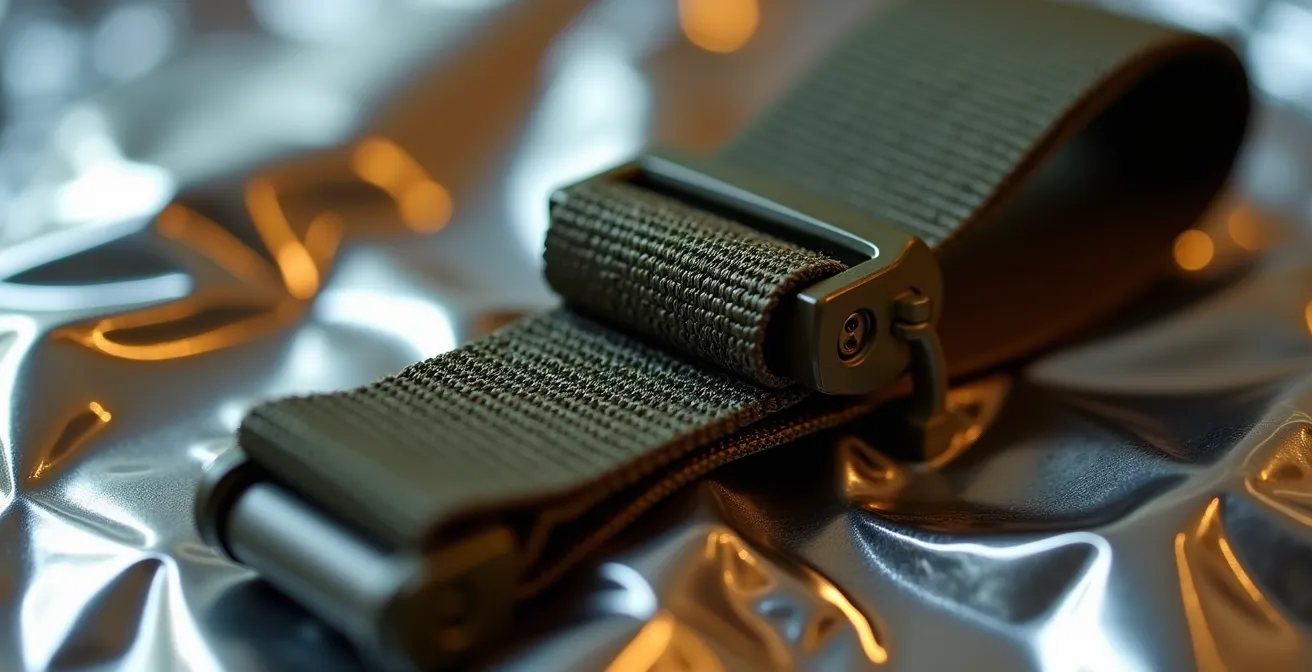
Auditing your own preparedness is a crucial step. It involves more than just buying a kit; it means thinking critically about what you have, what you know, and what the real risks are in your environment.
Your Preparedness Audit: 5 Steps to Assess Your Readiness
- Emergency Signals: List all the ways an emergency can be identified, from verbal calls for help to non-verbal signs like the FAST acronym or environmental clues.
- Resource Inventory: Take stock of your current preparedness tools. Do you have a first aid kit? Where is it? Does your phone have the 811 Info-Santé number saved?
- Knowledge Coherence: Honestly compare what you think you know with current guidelines. Do you know the new choking protocol? The correct CPR compression rate?
- Recall Under Pressure: Quiz yourself. Can you immediately recall the 3 signs of a stroke (FAST) or the 3 items missing from your kit? Differentiate what you know calmly versus what you could recall in a panic.
- Integration Plan: Identify your gaps. Is your kit missing a tourniquet? Is your CPR knowledge a decade old? Schedule a specific time to buy the missing items or register for an updated course.
Frostnip vs Frostbite: How to Spot the Difference on Children?
In a city with winters as harsh as Montreal’s, recognizing the signs of cold injury in children is a critical parenting skill. The danger often lies in underestimating exposure during everyday activities, like waiting for a school bus or an afternoon at a local skating rink (patinoire de quartier). The distinction between frostnip and frostbite is not academic; it dictates whether you can treat the issue at home or need to seek immediate emergency care.
Frostnip is the mildest form of cold injury. The skin will appear red and feel cold, accompanied by a tingling or burning sensation. Crucially, the underlying tissue remains soft and pliable. Frostnip is reversible with gentle rewarming and typically causes no permanent damage. Frostbite, however, is a medical emergency. It signifies that the tissue itself has frozen. The skin will look waxy, pale, white, or grey, and the area will be numb. The most telling sign is that the tissue will feel hard and solid to the touch. This indicates a severe injury that requires hospital care.
A case study of emergency patterns in Montreal highlights that with ambulance response times sometimes exceeding 14 minutes in areas like Kirkland during winter, the initial assessment and action by a parent are paramount. Attempting to aggressively rewarm a frostbitten area, such as by rubbing it, can cause significant additional tissue damage. The correct action for suspected frostbite is to get to an emergency room, like the Montreal Children’s Hospital, as quickly as possible.
This clear recognition guide is essential for any Montreal parent. Knowing the difference empowers you to make the right call, fast. This table, based on guidelines from Canadian first aid authorities, offers a clear path. Knowing these signs is crucial, as Canadian first aid providers have standardized this approach.
| Sign | Frostnip | Frostbite | Action |
|---|---|---|---|
| Skin Color | Red, then pale | Waxy white or grey | Call Info-Santé 811 vs ER |
| Sensation | Tingling, burning | Numbness, no feeling | Gentle rewarming vs urgent care |
| Skin Texture | Cold but soft | Hard, won’t move normally | Warm water vs hospital now |
| After Warming | Normal color returns | Blisters may form | Monitor vs Montreal Children’s Hospital |
What to Do When Your Heart Rate Exceeds 140 BPM at Rest?
Discovering that your resting heart rate is suddenly over 140 beats per minute (BPM) can be terrifying. This condition, known as tachycardia, can be benign, but it can also signal a serious underlying medical issue. In this situation, your most important skill is not self-diagnosis, but rather efficient navigation of Montreal’s healthcare system. Knowing who to call and where to go can save time and anxiety, ensuring you get the appropriate level of care.
Your first assessment should be for other emergency symptoms. If the high heart rate is accompanied by chest pain, shortness of breath, dizziness, or fainting, this is a medical emergency requiring an immediate 911 call for an ambulance. Do not attempt to drive yourself to the hospital. Dispatchers and paramedics are trained to recognize and begin treating serious cardiac events, and as Dr. Michel Valotaire of Urgences-santé notes, « Quick action and clear communication with Urgences-santé can facilitate access to specialized care at institutions like the Montreal Heart Institute. »
If, however, you have a sustained high heart rate without these other severe symptoms, the correct first step is to call Info-Santé at 811. A nurse can assess your symptoms over the phone, provide guidance, and direct you to the most appropriate service, which may be a walk-in clinic (clinique sans rendez-vous) or an emergency room. This triage step is crucial for avoiding an unnecessary and lengthy wait in an already overburdened ER. If you use a smartwatch, export your heart rate trends and any ECG readings before the call or visit; this data is invaluable for the medical team.
Key Takeaways
- Response times in Montreal make bystander action in the « pre-ambulance window » a non-negotiable factor in survival.
- Core first aid guidelines have changed (especially for choking), and Quebec’s Civil Code (Article 1471) strongly protects well-intentioned rescuers from liability.
- A modern first aid kit for Montreal must be adapted to urban risks, including a commercial tourniquet and a free Naloxone kit from a local pharmacy.
How to Interpret « Guarded Prognosis » When Speaking to an ICU Doctor?
Moving from the scene of an emergency to the hospital’s Intensive Care Unit (ICU) is a disorienting shift. The language used by medical staff can often feel coded and ambiguous, leaving families feeling confused and anxious. One of the most common and difficult phrases to hear is « guarded prognosis. » Understanding what a doctor at a Montreal hospital like the MUHC or CHUM means by this is a crucial skill for any family member acting as a patient advocate.
« Guarded prognosis » is medical shorthand for uncertainty. It means the team cannot confidently predict the outcome. Recovery is possible, but serious complications or a poor outcome are also significant risks. The doctor is being cautious and honest, avoiding giving either false hope or unnecessary despair. It is an invitation for more questions, not a final verdict. It is also important to understand the local communication style.
Medical communication in Quebec hospitals tends to be more direct and less litigation-averse than portrayed in American media. Doctors often provide frank assessments while remaining compassionate, which can initially surprise families accustomed to more cautious communication styles. Understanding this cultural difference helps families better interpret the tone and content of ICU conversations.
– Quebec medical communication style insight
When you hear « guarded prognosis, » your role is to gently press for clarity. Ask direct, open-ended questions like, « What is the best-case scenario you can see? » (Quel est le meilleur scénario envisageable?) and « What is the one thing that concerns you the most right now? » (Qu’est-ce qui vous inquiète le plus en ce moment?). These questions help translate the medical uncertainty into tangible hopes and fears you can understand. Remember that major Montreal hospitals have patient advocacy and social work departments whose entire job is to help you navigate these complex conversations.
Frequently Asked Questions About First Aid and Liability in Quebec
What does Quebec’s Article 1471 of the Civil Code protect?
It protects anyone who comes to the aid of another from liability for injury caused, unless it constitutes ‘gross fault’ (faute lourde). This legal standard requires reckless disregard for the victim’s safety, far beyond making a mistake while acting in good faith.
Are broken ribs during CPR considered ‘gross fault’ in Quebec?
No, broken ribs are a known and often unavoidable consequence of effective chest compressions and are not considered gross fault under Quebec law. The priority is maintaining blood flow to the brain, and the law protects this life-saving action.
Does the protection of Article 1471 apply to trained and untrained rescuers?
Yes, Article 1471 protects all well-intentioned citizens (personnes bien intentionnées) who provide emergency aid in Quebec, regardless of their level of formal training.
What does ‘guarded prognosis’ mean in simple terms?
It means the medical team is uncertain about the outcome. Recovery is possible but not guaranteed, and they are being cautious and honest about their predictions. It is a sign of uncertainty, not a final declaration.
What bilingual questions should families ask an ICU doctor in Montreal?
Two of the most helpful questions are: ‘What is the best-case scenario?’ / ‘Quel est le meilleur scénario envisageable?’ and ‘What concerns you most right now?’ / ‘Qu’est-ce qui vous inquiète le plus en ce moment?’