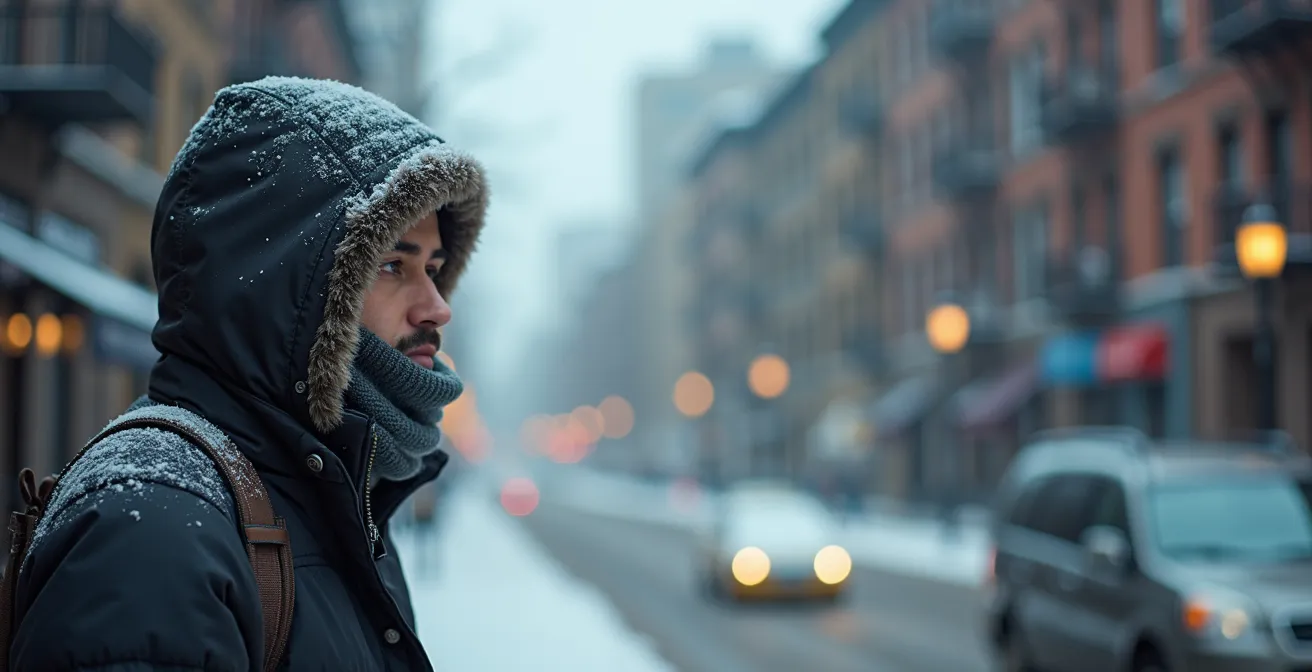
The painful, cracked skin you’re experiencing isn’t just dryness; it’s a compromised skin barrier failing against Montreal’s extreme cold, and a simple moisturizer is not enough.
- Your defense requires a clinical approach: rebuilding the skin’s lipid matrix with specific ingredients (ceramides, occlusives) and managing your environmental micro-climate.
- Surviving a Montreal winter is a holistic health challenge, linking your skin’s health to air quality, circulation, and even mental well-being.
Recommendation: Shift from reactive soothing to proactive fortification. This means creating a complete defense system for your skin, your home, and your habits, starting today.
That tight, stinging sensation when a -20°C wind whips across the Jacques Cartier Bridge is a familiar feeling for any Montrealer. For many, it escalates into something more painful: cracked skin that fissures, bleeds, and refuses to heal. You’ve likely been told the standard advice—moisturize more, drink water, and wear a scarf. Yet, the painful cycle continues, especially on your hands and face. This happens because the problem is far deeper than simple « dryness. » Your skin’s protective wall, its lipid barrier, has been breached by the relentless assault of low humidity and freezing temperatures.
The key to truly protecting your skin is to stop thinking about merely applying lotions and start thinking like a fortress engineer. Your mission is to rebuild and reinforce this barrier at a structural level. This involves not only choosing the right topical « bricks and mortar »—like ceramides, humectants, and occlusives—but also controlling the environment that wages war on your skin. This means managing your indoor air, understanding how cold affects your body’s systems from breathing to circulation, and recognizing the specific hazards posed by a Montreal winter, from the infamous ‘verglas’ to the air quality downtown.
This guide moves beyond generic skincare tips. As a dermatologist specializing in cold climates, I will provide you with a comprehensive defense strategy. We will dissect the interconnected systems that impact your well-being in the cold, from the air you breathe to the gear you wear. We’ll examine why a one-size-fits-all approach fails and how to tailor your defenses to your specific living situation, whether you’re in a modern Griffintown condo or a classic Plateau triplex. Prepare to build a resilient, comfortable, and healthy winter existence.
This article provides a complete overview of the health precautions and adaptations necessary for thriving in extreme cold. The following sections will detail everything from respiratory protection and frostbite prevention to managing your indoor climate and being prepared for emergencies.
Summary: A Guide to Protecting Your Skin and Health in a Montreal Winter
- Why Does Breathing Cold Air Trigger Asthma in Non-Asthmatics?
- Frostnip vs Frostbite: How to Spot the Difference on Children?
- Mittens or Gloves: Which Keeps Raynaud’s Disease Under Control?
- The « Heart Attack Snow » Phenomenon That Kills Healthy Men
- Humidifier or Purifier: Which Do You Need for Dry Winter Heating?
- Why Must Your Lamp Be 10,000 Lux to Actually Reset Your Brain?
- Why Are Wrist Fractures the Most Common Winter Injury in Montreal?
- CPR Changes: What Are the New Guidelines for Chest Compressions?
Why Does Breathing Cold Air Trigger Asthma in Non-Asthmatics?
When you step outside into the biting Montreal cold, your skin isn’t the only organ under immediate assault. The air you inhale—dry, frigid, and often polluted—can trigger a bronchospasm, a sudden constriction of the airways. This reaction can feel like asthma, causing wheezing, coughing, and shortness of breath, even in individuals with no history of the condition. The cold, dry air irritates the sensitive lining of your lungs, causing inflammation and triggering this defensive, but distressing, response. This is a critical part of your body’s holistic reaction to the cold, where respiratory distress adds another layer of physiological stress.
The problem is compounded by Montreal’s unique winter air quality issues. Cold weather inversions can trap pollutants close to the ground, and according to Montreal air quality monitoring data, fine particulate matter (PM2.5) levels often rise during the coldest months. These microscopic particles penetrate deep into the lungs, exacerbating the irritation caused by the cold air itself. Protecting your respiratory system is therefore a key part of your overall winter defense strategy.
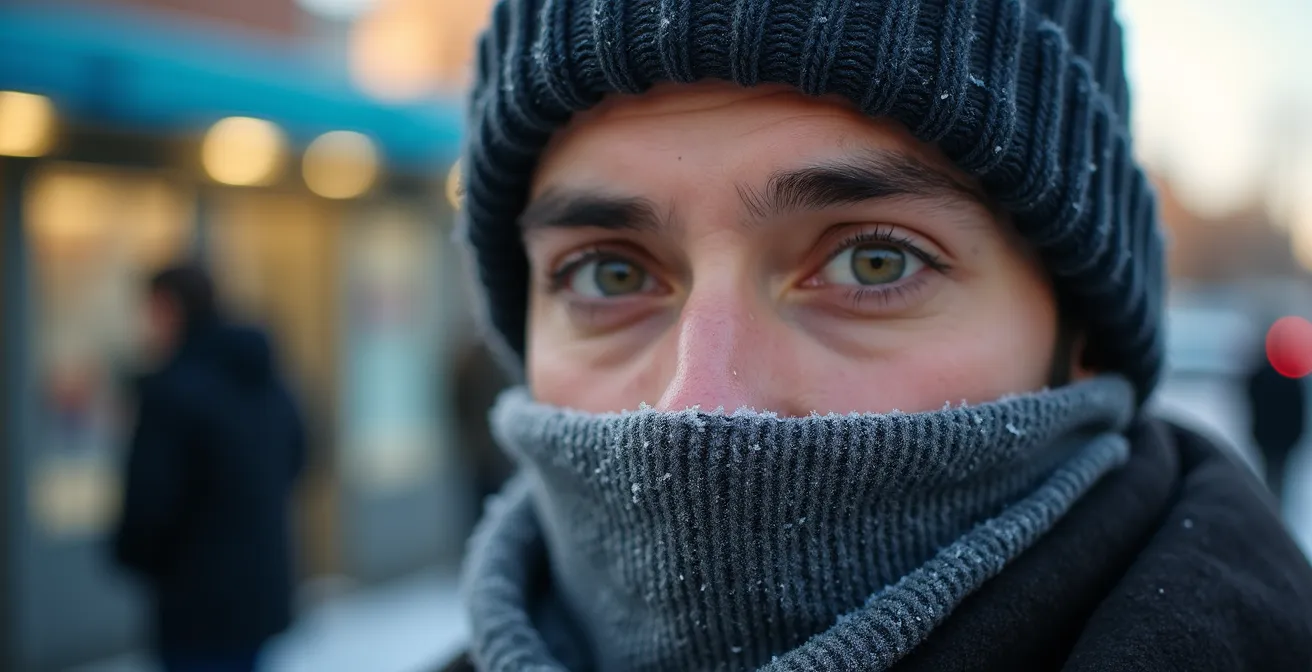
The most effective strategy is to create a micro-climate for the air you breathe. Using a merino wool or synthetic balaclava pulled up over your nose and mouth when waiting for an STM bus or walking downtown is crucial. This simple barrier warms and humidifies the air before it reaches your lungs, drastically reducing the shock and irritation. It’s also vital to monitor the Air Quality Health Index (AQHI) daily; when readings are high (7 or above), consider exercising indoors to minimize respiratory strain. This proactive approach to breathing is as important as applying a barrier cream to your skin.
Ultimately, protecting your lungs is a fundamental step in reducing the overall systemic stress that winter places on your body, allowing it to better manage other challenges, including skin health.
Frostnip vs Frostbite: How to Spot the Difference on Children?
For parents in Montreal, a child’s rosy cheeks after playing in the snow can be a sign of healthy fun or the first warning of a serious injury. It is clinically essential to distinguish between frostnip and frostbite, as children lose heat from their skin much faster than adults. Frostnip is the mild, initial stage. The affected skin, typically on cheeks, nose, ears, or fingers, will appear red and feel numb or tingly. This is a warning sign that the tissue is getting too cold, but it is reversible with no permanent damage if treated promptly.
Frostbite is a far more severe medical emergency, occurring when the skin and underlying tissues actually freeze. The appearance changes dramatically: the skin becomes white, waxy, and feels hard or firm to the touch. There will be a complete loss of feeling in the area. This indicates that tissue damage is occurring, and it requires immediate professional medical attention. Even brief exposure can be dangerous; according to Canadian Paediatric Society guidelines, exposed skin can begin to freeze at a windchill of just -27°C, a common reality during a Montreal January.
Emergency Protocol for Frostbite in Montreal
Children’s vulnerability is high; just 15 minutes of play at -15°C can cause frostnip on exposed cheeks. If you suspect frostnip, bring the child inside immediately. Rewarm the affected area gradually using warm (not hot) water, around 40°C, for 20-30 minutes. Never rub the area, as this can cause more tissue damage. If you suspect frostbite, however, do not attempt to rewarm the area yourself. Protect it from further cold, keep the child warm, and go to the nearest emergency room immediately. A 30-minute wait for a school bus without proper mittens can be enough to cause serious frostbite on a child’s fingers.
The best defense is proactive protection. Ensure children are dressed in layers, with a waterproof outer layer, and that all exposed skin is covered. This includes properly fitting hats that cover the ears, a neck warmer or scarf, and, most importantly, warm mittens. Check on them frequently when they are playing outside, specifically touching their cheeks and fingers to check for coldness or hardness.
This vigilance is a non-negotiable part of winter safety, preventing a day of fun from turning into a trip to the Montreal Children’s Hospital.
Mittens or Gloves: Which Keeps Raynaud’s Disease Under Control?
For those suffering from Raynaud’s Disease, a Montreal winter is more than uncomfortable; it’s a painful condition where cold temperatures trigger spasms in blood vessels, causing fingers and toes to turn white or blue and become numb. This circulatory issue severely compromises the health of the skin on your extremities, making it prone to cracking and ulceration. The choice between mittens and gloves is therefore not a matter of style, but of medical management. From a clinical perspective, mittens are unequivocally superior for warmth. By keeping your fingers together in a single compartment, they share body heat, creating a warmer pocket of air and maintaining better circulation compared to the individual insulation of gloves.
However, the realities of city life, like tapping an OPUS card or using a smartphone to check the STM bus schedule, demand dexterity that mittens lack. This creates a practical dilemma for Montrealers with Raynaud’s. The ideal solution often lies in a hybrid or layered approach. Using thin, touchscreen-compatible liner gloves inside a larger pair of mittens provides the best of both worlds: warmth during your commute and dexterity when you need it. Heated gloves or mittens, which contain active battery-powered heating elements, represent the ultimate solution for severe cases, providing consistent warmth that counteracts the vasospasms.
The following table breaks down the clinical and practical considerations for a Montrealer managing Raynaud’s.
| Feature | Mittens | Gloves | Heated Options |
|---|---|---|---|
| Warmth Retention | Excellent – fingers share warmth | Good – individual finger coverage | Best – active heating element |
| Dexterity | Poor – limited finger movement | Excellent – full finger control | Good – depends on model |
| OPUS Card Use | Very difficult | Easy with touchscreen tips | Varies by model |
| Battery Life | N/A | N/A | 2-8 hours depending on settings |
| Montreal Availability | Widely available | Widely available | Atmosphere, Sail, MEC |
Beyond handwear, managing Raynaud’s involves a holistic approach. It’s crucial to keep your entire body warm to prevent the peripheral vasoconstriction from triggering. This includes wearing warm socks, a hat, and layers of clothing. Keeping disposable hand warmers in your pockets can provide an emergency boost of heat. Finally, consistent moisturization is key, as the poor circulation associated with Raynaud’s can lead to severely dry, cracked skin. Applying a thick, occlusive moisturizer before putting on your handwear creates a protective barrier against both the cold and moisture loss.
Choosing the right system is a fundamental part of maintaining skin integrity and overall comfort throughout the long winter months.
The « Heart Attack Snow » Phenomenon That Kills Healthy Men
In Montreal, the transition from the light, fluffy snow of January to the heavy, wet snow of a March storm brings a hidden but deadly risk. This dense, water-laden snow is often called « heart attack snow » by cardiologists for a grimly accurate reason. Shoveling it places an enormous and sudden strain on the cardiovascular system. The combination of strenuous physical exertion and cold air, which constricts blood vessels and increases blood pressure, can trigger a heart attack, even in men who consider themselves healthy and have no prior diagnosis of heart disease.
The act of lifting a shovelful of this heavy snow is equivalent to lifting significant weights repeatedly, but without the controlled environment of a gym. Men, particularly those over the age of 45, who may have undiagnosed risk factors like high blood pressure or cholesterol, are especially vulnerable. The body’s physiological response is to work overtime to supply blood to the muscles and maintain core temperature, a perfect storm for a cardiac event. Recognizing the warning signs is critical: it’s not always the dramatic chest-clutching seen in movies. Symptoms can include chest tightness or pressure, pain radiating to the jaw or left arm, shortness of breath, or sudden nausea. If any of these occur, stop immediately and call 911.
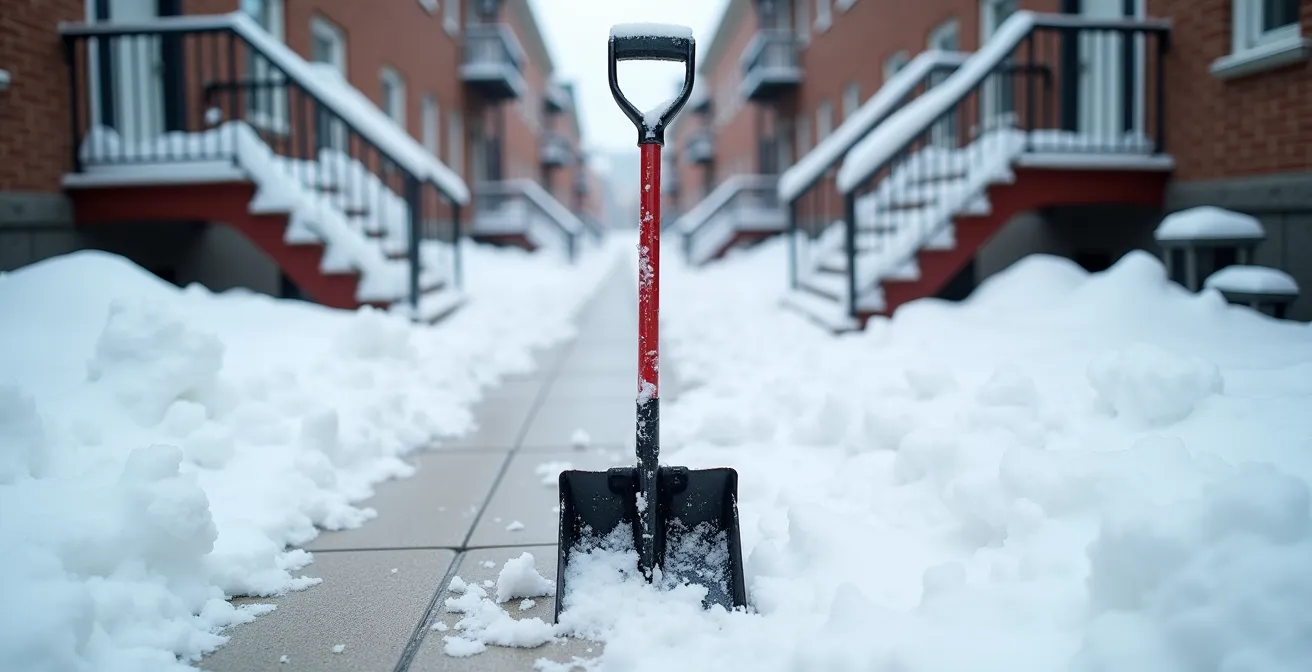
Safety is about technique and self-awareness. The most important rule is to push the snow rather than lift it whenever possible. When you must lift, use your legs, not your back, and avoid twisting motions. Taking frequent breaks—at least every 15 minutes—is not a sign of weakness but a crucial safety measure to allow your heart rate to recover. For those with any known risk factors or who are simply not accustomed to intense exercise, hiring one of Montreal’s many « déneigeur » services is a wise investment in your health. An electric snow blower is also a much safer alternative for clearing a typical city driveway.
Treating that late-winter snowfall with the respect it deserves can be a life-saving decision.
Humidifier or Purifier: Which Do You Need for Dry Winter Heating?
While you focus on bundling up against the outdoor cold, an invisible battle is being waged against your skin indoors. Central heating systems, especially the steam radiators common in older Plateau triplexes, bake the moisture out of the air. This causes indoor humidity to plummet, often far below the optimal 30-50% range. In fact, as reported by Environment Canada data, indoor humidity levels can drop below 15% during Canadian winters. This Sahara-like environment aggressively pulls moisture from your skin through a process called Transepidermal Water Loss (TEWL), leaving your skin barrier parched, itchy, and vulnerable to cracking.
For most Montreal homes in winter, a humidifier is the essential appliance for skin health. It adds moisture back into the air, directly counteracting the drying effects of your heating system and protecting your skin’s lipid barrier. However, the type of housing you live in dictates your specific needs. A newer, well-sealed Griffintown condo might have issues with stale, trapped air, making an air purifier with a HEPA filter a co-priority to remove airborne irritants. In contrast, an older apartment may be so dry that a powerful humidifier is the only tool that matters. Over-humidifying can create its own problems, like mold, so using a model with a built-in hygrometer to maintain a target humidity is a smart clinical choice.
This table outlines the typical recommendations based on common Montreal housing types:
| Housing Type | Main Issue | Recommended Equipment | Target Humidity |
|---|---|---|---|
| Griffintown Condo (New) | Sealed, needs ventilation | Air Purifier with HEPA filter | 35-45% |
| Plateau Triplex (Old) | Steam radiators, extreme dryness | Powerful Humidifier | 30-50% |
| Poorly Ventilated Apartment | Mold risk from over-humidifying | Humidifier with built-in hygrometer | 30-40% |
Your 5-Step Skin Barrier Audit for Montreal Winters
- Cleanser Check: Is your daily cleanser « soap-free » and pH-balanced? Swap any foaming or stripping cleansers for a gentle, creamy, or oil-based formula that cleans without removing essential lipids.
- Barrier-Building Serum: Are you using a dedicated serum? Introduce a serum with ceramides, niacinamide, or hyaluronic acid immediately after cleansing on damp skin to provide the « bricks » for your barrier.
- Moisturizer Matrix: Does your moisturizer contain the trifecta? Your daily cream must have humectants (like glycerin), emollients (like shea butter), and, most importantly, occlusives (like dimethicone or petrolatum) to lock moisture in.
- Nightly Seal: Are you sealing it all in at night? Apply a thin layer of a heavy occlusive balm (like Vaseline or Aquaphor) as the very last step of your nighttime routine to create a « second skin » and prevent overnight water loss.
- Environmental Scan: Is your bedroom’s humidity above 30%? Place a hygrometer by your bed. If it’s below 30%, run a humidifier nightly. This is a non-negotiable step to give your skin a healing environment for 8 hours.
By managing your indoor air, you create a sanctuary where your skin can heal and fortify itself against the harsh outdoor conditions.
Why Must Your Lamp Be 10,000 Lux to Actually Reset Your Brain?
The impact of a Montreal winter extends beyond the physical cold; it affects our brain chemistry. The short, dark days can trigger Seasonal Affective Disorder (SAD), a form of depression characterized by low energy, mood changes, and fatigue. Light therapy is a clinically proven treatment, but its effectiveness depends entirely on the specific intensity of the light used. The standard for medical efficacy is 10,000 lux—a measure of light intensity approximately 100 times brighter than typical indoor lighting. Anything less is simply not powerful enough to stimulate the retina and send the necessary signals to the brain to suppress melatonin production and reset your circadian rhythm.
Think of it as a key for a lock. A 5,000 lux lamp is like a poorly cut key; it might jiggle in the lock, but it won’t turn the mechanism. A 10,000 lux lamp is the correctly cut key that successfully triggers the desired biological response. However, simply owning a 10,000 lux lamp is not enough; proper usage is critical for it to work. As noted in clinical guidelines for light therapy:
To get the prescribed 10,000 lux from a lamp rated at that level, you must sit within 16-24 inches for 20-30 minutes
– Sleep Medicine Research, Clinical guidelines for light therapy in seasonal affective disorder
This means placing the lamp on your desk or table while you have your morning coffee or read the news is the correct protocol. The light should be positioned at a 45-degree angle from your face, not directly in front of your eyes, to avoid glare while still ensuring the light reaches your eyes. Consistency is paramount; using the lamp for 20-30 minutes every morning, ideally before 8 AM, helps anchor your body’s internal clock to a healthy daytime schedule, improving mood and energy levels within 2 to 3 weeks. For those with a clinical diagnosis of SAD, it’s worth exploring medical-grade devices from specialized suppliers, as they may be covered by some insurance plans in Quebec.
Managing the « winter blues » is a key part of a holistic health strategy, as your mental state significantly impacts your body’s ability to cope with physical stressors like cold and skin damage.
Why Are Wrist Fractures the Most Common Winter Injury in Montreal?
In Montreal, the most common sound of winter isn’t sleigh bells, but the crunch of salt on an icy sidewalk. The city’s notorious freeze-thaw cycles create a uniquely treacherous form of nearly invisible ice known as ‘verglas’ (black ice). When a pedestrian slips on an unseen patch of verglas, the body’s immediate, instinctive reaction is to throw out one’s hands to break the fall. This protective reflex tragically concentrates the entire force of the body’s impact onto the small, delicate bones of the wrist, leading to a FOOSH (Fall on an Outstretched Hand) injury. This is precisely why wrist fractures are the single most common winter-related injury seen in Montreal emergency rooms.
The danger is not evenly distributed across the city. Certain areas pose a significantly higher risk. The steep, uneven sidewalks of neighborhoods built on the slopes of Mont-Royal, like those in the Plateau or near the downtown universities, are notorious hazard zones. Likewise, the tiled entrances to metro stations often become slick with melted snow that refreezes into treacherous sheets of ice. This environmental reality is reflected in national statistics.
Montreal’s Verglas Hazard Zones and Injury Data
The environment of Montreal, with its sloping terrain and frequent freeze-thaw cycles, makes it a hotspot for slip-and-fall injuries. According to the Canadian Hospitals Injury Reporting Program, a staggering 70.5% of ice-related fractures affect the upper extremities, with wrist and forearm fractures topping the list. The instinctive action to break a fall is the direct cause. High-risk zones, such as the slopes around Mont-Royal Park and icy patches at metro station entrances, see a concentration of these incidents each winter, filling local orthopedic clinics.
Prevention involves both awareness and proper gear. The most critical piece of equipment for any Montreal pedestrian is a pair of winter boots with high-traction rubber soles designed for gripping ice. When walking in known hazard zones, shorten your stride and walk more flat-footed, like a penguin, to maintain a lower center of gravity. Keeping your hands out of your pockets allows you to use your arms for balance. In particularly icy conditions, especially for seniors or those with mobility issues, using crampons that strap onto your boots can be a life-saving measure.
Navigating the city safely is a skill, and being prepared for the treachery of verglas is an essential part of any Montrealer’s winter survival kit.
Key Takeaways
- Your skin, respiratory system, and mental health are an interconnected ecosystem; a holistic approach is required to thrive in a Montreal winter.
- Proactive defense is superior to reactive treatment. This means managing your indoor humidity, wearing protective face coverings, and choosing the right gear like mittens over gloves.
- Environmental awareness is key: know the daily AQHI, understand the signs of frostbite, and be vigilant for ‘verglas’ on sidewalks to prevent injury.
CPR Changes: What Are the New Guidelines for Chest Compressions?
In the extreme environment of a Montreal winter, a cardiac arrest event—such as one triggered by shoveling heavy snow—presents unique challenges for a bystander. The latest Cardiopulmonary Resuscitation (CPR) guidelines have evolved to prioritize a simpler, more effective action for the general public: Hands-Only CPR. This approach emphasizes continuous, high-quality chest compressions and eliminates the rescue breaths for untrained bystanders. This change is particularly relevant in the cold, where providing effective rescue breaths is difficult and any interruption to compressions reduces the victim’s chance of survival.
The protocol is direct and focused. If you witness an adult suddenly collapse, your first actions are to ensure the scene is safe and to call 911 immediately. Then, you begin chest compressions. You should place the heel of one hand on the center of the person’s chest with your other hand on top. Push hard and fast, aiming for a rate of 100 to 120 compressions per minute—the tempo of the song « Stayin’ Alive » is a common memory aid. The compression depth should be at least 2 inches (5 cm) for an adult, allowing the chest to fully recoil between pushes. You should not stop until emergency medical services (like Urgences-santé) arrive and take over.
Knowing this protocol is not enough; being prepared to act is crucial. Many public spaces in Montreal, including metro stations and shopping centers, are equipped with Automated External Defibrillators (AEDs). These devices are designed for public use and provide voice prompts to guide you. If one is available, send another bystander to retrieve it while you continue compressions. Formal training provides the confidence to act decisively in a high-stress situation.
Montreal CPR Training Resources
Getting certified is an accessible and empowering step. Leading organizations in Montreal offer CPR/AED courses that incorporate the latest hands-only guidelines. The Heart and Stroke Foundation of Quebec, St. John Ambulance, and the Canadian Red Cross all provide certified training for approximately $85-$150. These courses are designed to give you the practical skills and confidence to act effectively during an emergency, a vital skill for any citizen, especially during the high-risk winter months.
By building a comprehensive defense system that protects your skin, supports your body’s systems, and prepares you for emergencies, you can not only survive but truly thrive in the face of a Montreal winter. Begin today by auditing your skincare, evaluating your home environment, and considering a CPR course to become a more resilient and prepared citizen.